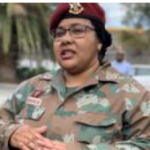
South Africa’s military has changed its dress policy to allow Muslim women to wear hijabs with their uniforms. It is a victory for Maj Fatima Isaacs, who led a three-year legal battle for her religious right to wear a headscarf beneath her military beret. The change of heart comes after the military dropped charges last week against Maj Isaacs for wearing one. She had faced dismissal for “wilful defiance and disobeying a lawful command” for refusing to remove it. Maj Isaacs, who works as a clinical forensic pathologist at a military hospital, told the Cape Times it was a victory not only for her, but all people who were “silently victimised” because of their religion.
“We are living in a democratic country which means that there should be no discrimination with regards to religious beliefs. I believe religion is the foundation of a moral state/country. This is an important victory,” she told the paper.
She also thanked the Legal Resource Centre (LRC), a rights group which took up her case in 2019. After military charges were dropped last week, it was agreed that Maj Isaacs could wear a headscarf that was tight, did not cover her ears and which was plain in colour – though the dress code did not officially change.(BBC)…[+]