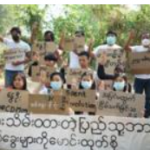
Pro-democracy activists in Myanmar are holding a “silent strike” to mark two years since a military coup that removed Aung San Suu Kyi from power. Protesters have urged the public to remain indoors and for businesses to close for Wednesday’s anniversary. The call came as the UK, US, Canada and Australia announced fresh sanctions against army-linked firms. The military administration on Wednesday extended a state of emergency for six months. The strike was held to mark two years since the Myanmar military launched a coup d’etat, removing the democratically-elected government. The army made allegations of widespread voter fraud in a vote held months earlier, in November 2020, which Ms Suu Kyi’s National League for Democracy (NLD) won with more than 80% of the vote. The military’s claims have been dismissed as baseless by the vast majority of the international community, and plans to hold new elections to cement junta rule have been dismissed as a “sham”, including by the UN.(BBC)…[+]
english news
Andrew Tate: Influencer appears in court to appeal against detention
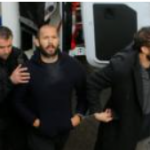
Influencer Andrew Tate has appeared in court in Romania to appeal against his detention after more than a month in custody. Handcuffed to his brother Tristan, he shouted to waiting reporters that he was innocent. The pair have been held since late December as police investigate allegations of rape and exploitation, which both men deny. Last month, a judge extended their detention until the end of February. Police have not yet laid any charges against the brothers, who moved to Romania five years ago. Filing an appeal against the custody extension on Wednesday, Andrew’s lawyer Ioan Gliga told journalists that he had “new evidence” to refute prosecutors’ arguments. “The victims deny any wrongdoing – it’s only in the minds of the prosecution that a crime has been committed,” he said. A verdict in the appeal is expected later today.(BBC)…[+]
Pope Francis in DR Congo: A million celebrate Kinshasa Mass
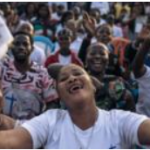
Pope Francis has celebrated one of his biggest Masses, with around a million attendees in Democratic Republic of Congo’s capital, estimates say. Huge crowds started to gather in Kinshasa well before dawn, including scores of schoolgirls dressed in white who danced along the Pope’s route. A public holiday was declared, so as many people as possible could attend. Around half of DR Congo’s population is Catholic – the largest Catholic community in Africa. It is more than 37 years since a pope had visited the mineral-rich but conflict-ridden country.
A 700-person choir, that had been practising together long before the pontiff was originally due to visit last July, had been assembled specifically for the event. The Pope’s original visit had to be postponed because of poor health. There had been some murmurings that the Pope has not been as critical of DR Congo’s political leadership as some had hoped, but the Mass at N’dole airport was a joyful event, and the pontiff did have a strong message of peace for those engaging in conflict in the country. On the second of his six-day visit to Africa, he said warring sides should forgive one another and grant their opponents a “great amnesty of the heart”. He went on to espouse the benefits of cleansing one’s heart of “anger and remorse, of every trace of resentment and hostility”(BBC)…[+]
Auckland floods: More heavy rain ahead for New Zealand’s largest city
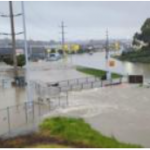
People in flood-hit New Zealand are bracing for more heavy rain this week following new severe weather alerts. At least four people have died and a state of emergency order continues in Auckland, which on Friday experienced its worst downpour on record. About 350 people needed emergency accommodation, New Zealand’s Prime Minister Chris Hipkins said. He added there had been significant damage across Auckland and the North Island. The newly-appointed PM also highlighted climate change’s role in the extreme weather event.
“It’s a 1-in-100-year weather event, and we seem to be getting a lot of them at the moment. I think people can see that there’s a message in that… Climate change is real, it’s with us,” Mr Hipkins said on Monday. He told national broadcaster TVNZ: “We are going to have to deal with more of these extreme weather events in the future. “We need to be prepared for that. And we need to do everything we can to combat the challenge of climate change.”(BBC)…[+]
Avalanche kills two skiers in Japan’s Nagano region
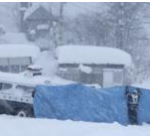
The bodies of two men caught in an avalanche on Sunday have been found in Nagano Prefecture, Japan. Extensive searches took place after the incident, which happened on the east slope of Mount Hakuba Norikura. Japanese authorities have not revealed their identity but confirmed they were from a group of five foreign skiers. Local police said they believed the men were off-piste skiing separately from the rest of the group when the avalanche took place. Police official Tomohiro Kushibiki told news agency AFP that the two men were found “in cardio-respiratory arrest” on Monday, a term often used in Japan before a death can be confirmed by a doctor.
The three other skiers were able to safely make it down the mountain. A warning for snow and avalanches remains in place for the area, after a cold snap last week which covered much of the region in snow. Nagano Prefecture, which hosted the 1998 Winter Olympics, is popular with tourists in the winter season, attracting many skiers from both Japan and abroad.(BBC)…[+]
Ukraine: Boris Johnson says Putin threatened him with missile strike
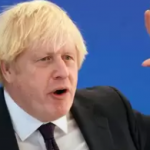
Boris Johnson has said Vladimir Putin threatened him with a missile strike in an “extraordinary” phone call in the run-up to Russia’s invasion of Ukraine. The then-prime minister said Mr Putin told him it “would only take a minute”. Mr Johnson said the comment was made after he warned the war would be an “utter catastrophe”. The claim is made in a BBC documentary on Mr Putin’s interactions with world leaders over the years. The Kremlin spokesman said it was a “lie”. Mr Johnson warned Mr Putin that invading Ukraine would lead to Western sanctions and more Nato troops on Russia’s borders.
He also tried to deter Russian military action by telling Mr Putin that Ukraine would not join Nato “for the foreseeable future”. But Mr Johnson said: “He threatened me at one point, and he said, ‘Boris, I don’t want to hurt you but, with a missile, it would only take a minute’ or something like that. Jolly. “But I think from the very relaxed tone that he was taking, the sort of air of detachment that he seemed to have, he was just playing along with my attempts to get him to negotiate.”(BBC)…[+]
Japan hunts for person who faxed bomb threats to schools
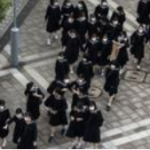
Japanese police are on the hunt for a person who sent bomb and death threats to hundreds of schools, prompting hasty closures. The threats were faxed to high schools and universities earlier this week from a Tokyo-registered number. No explosives have been found in school buildings, according to police, and there have been no reports of attacks on pupils and staff so far. Bomb threats are rare in Japan, which is known for its low crime rate. The first wave of messages began on Monday, reaching schools and universities across the country. In one prefecture, Saitama, more than 170 schools received bomb threats, said officials.
Local media reported that one message claimed that over 330 bombs had been set up, while another read: “I planted a major bomb.” Some reports said the messages demanded ransoms ranging from 300,000 yen (£1,870; $2,320) to 3 million yen. On Tuesday, messages threatening to kill students and teachers with homemade weapons were sent from the same number to high schools in various prefectures including Osaka, as well as Saitama and Ibaraki near Tokyo. The threats saw many schools in Japan shutting down as a precaution, though most had re-opened by Thursday. Fax machines are still commonly used in Japan.(BBC)…[+]
Opium production in Myanmar surges to nine-year high

The production of opium increased sharply in Myanmar, rising to a nine-year high, according to the UN. It touched nearly 795 metric tonnes in 2022, nearly double the production in 2021 – 423 metric tonnes – the year of the military coup. The UN believes this is driven by economic hardship and insecurity, along with higher global prices for the opium resin that is used to make heroin. The coup plunged much of Myanmar into a bloody civil war that still continues. “Economic, security and governance disruptions that followed the military takeover of February 2021 have converged, and farmers in remote, often conflict-prone areas in northern Shan and border states, have had little option but to move back to opium,” said Jeremy Douglas, the regional representative for the UN Office on Drugs and Crime (UNODC). The region, where the borders of Myanmar, Thailand, and Laos meet – the so-called “Golden Triangle” – has historically been a major source of opium and heroin production.(BBC)…[+]
Man held after fatal machete attack at Spanish church
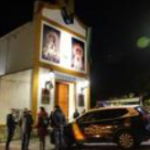
One person has died and at least one other injured after a man wielding a machete carried out attacks at two churches in southern Spain. According to the interior ministry the suspect first entered the church of San Isidro in Algeciras where the priest was attacked and seriously injured. The alleged attacker then went to a second church where a verger was stabbed to death. The suspect was disarmed and arrested shortly afterwards. A statement by the Ministry of the Interior said: “Just after 19:00 local time (18:00 GMT) this evening, a man entered the church of San Isidro in Algeciras, where, armed with a machete, he attacked the priest, leaving him seriously wounded.” “Subsequently, he entered the church of Nuestra Senora de La Palma in which, after causing damage, he attacked the verger.” The statement added that the alleged victim managed to get outside the church but was attacked again and fatally wounded. “Moments later, (the assailant) was disarmed and arrested and is currently in police custody,” the ministry said.(BBC)…[+]
Beirut blast investigator charges key figures after long suspension
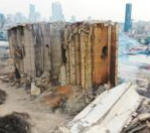
The judge leading the investigation into the devastating port explosion in Beirut in 2020 has reportedly charged more key figures as part of his probe. Despite Tarek Bitar’s work being frozen for 13 months amid legal challenges, he unexpectedly said on Monday that he thought he could restart his inquiries. But on Tuesday the public prosecutor told him that he had no jurisdiction. More than 200 people were killed when ammonium nitrate that was being stored unsafely at a port warehouse ignited. The blast it created was one of the worst non-nuclear explosions in recent history, and devastated a large area of the Lebanese capital. There is no official confirmation of the identities of those who have been charged, or detail of what indictments they may face. Instead, lists of names and potential dates for questioning sessions are being circulated among local journalists, apparently released by judicial sources. Senior figures like the heads of the General Security and State Security departments are new names to appear on the list.(BBC)…[+]