english news

Rare syndrome seen in UK children

NHS doctors have been warned to look out for a rare but dangerous reaction in children that may be linked to coronavirus infection. An urgent alert sent out to GPs said that intensive care departments in London and other parts of the UK have been treating severely sick children with unusual symptoms.

This includes “multi-system inflammation” with flu-like symptoms. Some, but not all, tested positive for coronavirus. It is unclear how many children have been diagnosed with the new syndrome, although the numbers will be low.

The alert, which was issued to GPs in North London by their clinical commissioning group, said there was “a growing concern” that a coronavirus-related inflammatory syndrome is emerging in children in the UK or that there may be another, as yet unidentified, infection linked to these cases. These young patients of varying ages were extremely ill. They had similar features to toxic shock syndrome, which can include a high temperature, low blood pressure, a rash and difficulty breathing. Some also had gastrointestinal symptoms – tummy pain, vomiting or diarrhoea – and inflammation of the heart, as well as abnormal blood test results. Experts say these are the signs you can see when the body becomes overwhelmed as it tries to fight off an infection.(BBC)…[+]
New York to allow tests in pharmacies

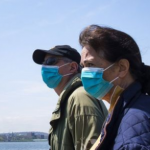
The US state of New York, the epicentre of the country’s Covid-19 outbreak, will allow pharmacies to carry out tests for the virus, the governor says. Andrew Cuomo said some 5,000 pharmacies would be able to carry out testing, with the aim to provide 40,000 per day. The US has more than 938,000 confirmed cases. Almost a third of the 53,751 deaths happened in New York City alone. Meanwhile, President Donald Trump did not hold his daily briefing, saying it was not worth his “time or effort”.

Speaking on Twitter on Saturday, he blamed the media for asking “nothing but hostile questions”. He was heavily criticised after suggesting at Thursday’s White House news conference that disinfectant could potentially be used as a treatment for the virus. His remarks have been condemned as dangerous by doctors and manufacturers, as disinfectants are hazardous substances and can be poisonous if ingested.In New York City, calls to the hotline for exposure to certain household chemicals more than doubled in the 18 hours after Mr Trump’s remarks – 30 cases compared to 13 for the same time frame last year.(BBC)…[+]

Auschwitz survivor Henri Kichka dies of Covid-19

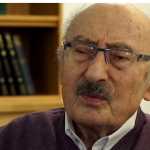
One of Belgium’s last Holocaust survivors, Henri Kichka, has died of Covid 19. He passed away on Saturday in a Brussels care home at the age of 94. He was one of a handful of men and women left who had survived Auschwitz, the Nazi death camp in occupied southern Poland during World War Two.

He spoke to the BBC in January about his experience. Asked how he survived, he said: “You did not live through Auschwitz. The place itself is death.” In a Facebook tribute, his son Michel Kichka wrote: “A small microscopic coronavirus has succeeded where the entire Nazi army had failed. My father had survived the Death March, but today his Life March has ended.”

Henri Kichka was born in Brussels in 1926, in a Jewish family of Polish origin. His parents had fled anti-Semitism in Eastern Europe to build new lives in the West. When Nazi Germany invaded and occupied Belgium, they were left with nowhere to hide and were soon deported, in 1942.

Henri and his father were to work as slave labourers, while the women of the family – Henri’s mother and his sisters as well as his aunt – were taken to Auschwitz where they were gassed and cremated as soon as they arrived. In 1945, Henri was marched to a German camp by Nazi guards who sent starving camp prisoners on “death marches” westwards as Soviet forces approached Nazi camps in eastern and central Europe.(BBC)…[+]

Australians download COVIDSafe contact tracing app

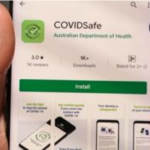
More than a million Australians have downloaded a coronavirus contact tracing app within hours of it being released by the government.

The COVIDSafe smartphone app uses a Bluetooth wireless signal to exchange a “digital handshake” with another user when they come within 1.5m (4.9ft). The app then logs this contact and encrypts it. Users will be notified if they have had more than 15 minutes of close contact with another user who tests positive. Australia has recorded 6,694 confirmed coronavirus cases and 80 deaths from the virus, according to data from Johns Hopkins University.

The rise in infections has slowed considerably in recent weeks, however, with just 16 new cases recorded on Sunday.

The app – based on one introduced in Singapore – went live at 1800 local time on Sunday (0900 BST), and Health Minister Greg Hunt confirmed the download figures on Sunday night. “As at 10:30 PM, 1 million Australians have now downloaded and registered for the #COVIDSafeapp – please join us and help protect ourselves, our families, each other but above all else our nurses and doctors,” Mr Hunt wrote on Twitter.(BBC)…[+]

Nobel prize economist says India must do more for poor

A Nobel-prize winning economist has said India needs to be “much more generous” in providing relief to the millions of people who have been direly hit by the ongoing lockdown. “We haven’t done anything close to enough,” Indian-American academic Abhijit Vinayak Banerjee, told the BBC.

After imposing the lockdown on 24 March, India announced a $23bn (£18bn) relief package. Much of it involves cash transfers and food security for the poor. “We don’t want anyone to remain hungry, and we don’t want anyone to remain without money in their hands,” Finance Minister Nirmala Sitharaman said at the time.

Professor Banerjee, who won the Nobel Prize in economics in 2019 with co-researchers Esther Dufflo and Michael Kremer, said the “government was right in its thinking to throw a shock in the system” to contain the spread of the Covid-19 infection. “But the lockdown is not the end of the story. This disease is going to be with us for a long time until a vaccine arrives, which is not anytime soon,” the economist who teaches at Massachusetts Institute of Technology (MIT) said.(BBC)…[+]

‘I can’t wash my hands – my water was cut off’

Unlike in many European countries where it is illegal, US households have the water connection turned off for non-payment of bills. That has left many Americans without water at a time when they are being told that one of the most important things they can do is wash their hands.

“I have been without water for about six months now,” says Akiva Durr. A mother of two girls, she lives in one of the most deprived neighbourhoods not just of Detroit, but of the entire country. “This time has been very stressful, but I did make my own sanitiser,” says Akiva, adding that she has been using aloe vera gel and alcohol as a makeshift way to try to protect her children from the virus. Before the pandemic, Akiva was collecting water from neighbours and friends to bathe her children. “I’d give them a bath every other day, or do a sponge bath to save water,” she tells me. “It’s depressing.”

Now even visiting neighbours has become difficult, and that is not the only way life has been made much more difficult during this time for those without water. “Most people whose water is turned off look just like you and I,” says Reverend Roslyn Bouier. “They (usually) go to work every day and their kids go to school,” she says. “That means they could use toilets away from home, find ways to drink water, or be able to wash their hands.”(BBC)…[+]

‘Insect apocalypse’ more complicated than thought

The global health of insect populations is far more complicated than previously thought, new data suggests.

Previous research indicated an alarming decline in numbers in all parts of world, with losses of up to 25% per decade. This new study, the largest carried out to date, says the picture is more complex and varied. Land-dwelling insects are definitely declining the authors say, while bugs living in freshwater are increasing.Reports of the rapid and widespread decline of insects globally have caused great worry to scientists.

The creatures are among the most abundant and diverse species on the planet and play key roles, from aerating the soil to pollination and recycling of nutrients. Case studies, such as one from nature reserves in western Germany, indicated a dramatic fall, with around a 75% decrease over 27 years.

Many other, similar reports have followed. But many of these were specific to a region or a species. This new study, the largest on insect change to date, aims to give a more complete understanding of what’s really happening to bugs worldwide.(BBC)…[+]

Canada shooting: Police defend lack of emergency alert

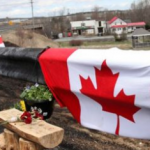
Police say they were preparing an emergency alert when police shot and killed the suspect in the worst mass shooting in Canada’s modern history. Authorities have been criticised for relying on social media to alert Nova Scotia residents the manhunt for the gunman.

At least 22 people were killed over 13 hours that spanned Saturday night to Sunday morning. Police are yet to determine a motive for the crime. The victims include a 17-year-old, a pregnant healthcare worker and a veteran Royal Canadian Mounted Police (RCMP) officer. Family members of some victims have spoken publicly about whether a province-wide alert sent to all residents of Nova Scotia could have prevented some of the deaths.

Nova Scotia Royal Canadian Mounted Police (RCMP) Chief Supt Chris Leather said that from the time of the initial calls to emergency services on Saturday evening reporting gunshots in the rural community of Portapique, police officials were processing fast-moving information.(BBC)…[+]

Apple iPhone at risk of hacking through email app

A flaw in Apple’s mobile operating system may have left millions of iPhone and iPad users vulnerable to hackers.

Research published by ZecOps, a mobile security firm, said a bug in the Mail app made devices susceptible to sophisticated attacks. The firm said it had “high confidence” the bug has been used to exploited at least six high-profile victims. An Apple spokesperson told Reuters a fix would be included in upcoming software updates.

ZecOps reported the bug to Apple in March. The tech giant had not previously known about the issue. To exploit this flaw, hackers would send a seemingly blank message to an iPhone or iPad users Mail account – the email app on iOS devices. When the email was opened it would crash the app forcing the user to reboot. During the reboot, hackers would be able to access information on the device.(BBC)…[+]

Merkel warns coronavirus crisis ‘still just the beginning’

German Chancellor Angela Merkel says her country must remain “clever and cautious” in handling the coronavirus crisis, as “it’s not the end phase but still just the beginning”. “We will be with it for a long time,” she warned parliament, ahead of an EU video summit on the crisis.

She stressed the need for European cohesion in fighting the virus. And she said Germany should be ready to “make very different, meaning much higher contributions to the EU budget”. The extra funding should be provided “in a spirit of solidarity” and for a limited time, she said. Italy, at the epicentre of the pandemic in Europe, has been especially vocal in urging its EU partners to jointly guarantee debt, as part of a huge rescue package. But Germany, the Netherlands and Austria oppose any mutualisation of debt, in the form of so-called  “coronabonds”. Under current EU rules countries cannot be made liable for each other’s debts.(BBC)…[+]