english news

End of Golden Age: Dutch museum bans term from exhibits

One of the Netherlands’ most prestigious museums has fuelled fresh debate over the the country’s colonial past by deciding it will no longer use the term Golden Age to describe the 17th century when it was at its pinnacle as a military and trading power. The Amsterdam Museum said that in an attempt to be “polyphonic and inclusive”, the common description of the century in which the Netherlands bestrode the world stage would be banned from its exhibits.

The museum said the term Gouden Eeuw did not do justice to those who were exploited during the era in which the Netherlands was at the forefront of scientific discovery and artistic achievement.

Tom van der Molen, the curator of the 17th century at the museum, said: “The Golden Age occupies an important place in Western historiography that is strongly linked to national pride. But positive associations with the term such as prosperity, peace, opulence and innocence do not cover the charge of historical reality in this period. The term ignores the many negative sides of the 17th century such as poverty, war, forced labour and human trafficking.” The museum said the term would not be used in future exhibitions and that the name of the museum’s permanent collection will be changed from Dutch in the Golden Age to Group Portraits of the 17th Century. The treatment of the Dutch colonial period in public spaces has become a matter for keenly contested debate in recent years with street names changed and questions raised about the relevance of statues celebrating military heroes of the past. (The Guardian)…[+]
Kenyan schoolgirl, 14, kills herself after alleged period shaming by teacher

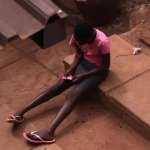
A 14-year-old schoolgirl in Kenya took her own life after a teacher allegedly embarrassed her for having her period in class. The girl’s death has prompted protests from female parliamentarians and reignited a national conversation about “period shaming” and access to menstrual products.

The girl’s mother said her daughter was found dead last Friday after she got her period during class and stained her clothes. Her teacher allegedly called her “dirty” and expelled her from the classroom in Kabiangek, west of Nairobi.

It was the girl’s first period, her mother told local media, and she did not have a sanitary pad. The incident has cast a spotlight on a 2017 law requiring Kenya’s government to distribute free sanitary pads to all schoolgirls. Poor implementation of the law is the subject of a parliamentary investigation. On Wednesday, female MPs “laid siege” to the education ministry to protest about the girl’s death and discuss the programme, MP Esther Passaris wrote on Twitter.

More than 200 parents also protested outside the school in Kabiangek this week, local media reported, condemning both the teacher’s handling of the incident and alleged lack of action by authorities. Alex Shikondi, the regional police chief, said the girl’s death was under investigation.(The Guardian)…[+]

South Africa sexual violence protesters target stock exchange

People campaigning over the high levels of violence against women in South Africa have taken their protest to the financial heart of the country. Hundreds have gathered outside the Johannesburg Stock Exchange to call on the country’s big firms to do more to tackle gender inequality.

Protests have been triggered by the rape and murder of 19-year-old Uyinene Mrwetyana in Cape Town last month. Over 41,000 people were raped in South Africa in the year from April 2018. Last week’s news cycle was littered with stories of the rape and murder of women and children in several parts of the country.

It left many women asking: “Am I next?” The rape and murder of Uyinene Mrwetyana was a moment that made women feel vulnerable and scared. There was a sombre mood at the protest, which brought traffic to a standstill in Johannesburg’s Sandton district. Tears were rolling down the women’s faces as they started singing “Senzeni na?”, which loosely translated from Zulu means “what have we done to deserve this?” The latest crime statistics released on Thursday revealed that women are justified to fear for their lives because murder, rape and sexual assaults have all increased.(BBC)…[+]

Google to pay €1bn to end French tax probe

Google is to pay French authorities almost €1bn (£900m) to end a long-running investigation into its taxes. The settlement includes a €500m fine and additional taxes of €465m, but it is less than the tax bill authorities had accused Google of evading.

It rounds off a four year investigation that saw authorities raid Google’s Paris headquarters in 2016. Investigators said Google owed about €1.6bn in unpaid taxes amid a wider crackdown on tax planning of big firms. French authorities had been seeking to establish whether Google, which has its European headquarters in Dublin, failed to declare some of its activities in the country.

The search giant, which is part of Alphabet, pays little tax in most European countries because it reports almost all of its sales in Ireland. It is able to do that thanks to a loophole in international tax law. However, that loophole hinges on staff in Dublin concluding all sales contracts. The agreement allows Google “to settle once for all these past disputes,” said Antonin Levy, one of the firm’s lawyers.(BBC)…[+]

Rape accuser ‘devastated’ at case being dropped

A woman who says she was raped by a man she had been on a date with has told the BBC she was left “devastated” after prosecutors decided to drop her case. Annie Tisshaw says her mental health “really suffered” during the year-long investigation, and she was then told the CPS would not proceed further.

A report shows the number of rape convictions in England and Wales is at its lowest level since records began. There were 1,925 convictions in 2018-19 – a 27% drop from the previous year. This was in spite of allegations of rape reaching a high of 58,000 in England and Wales. Campaigners say the Crown Prosecution Service (CPS) has changed its approach in rape cases – no longer building rape prosecutions, but screening cases out if they think a jury will not convict. This is denied by the CPS, which has announced a review of its decisions in rape cases.

Annie, who has waived her right to anonymity, told the Victoria Derbyshire show that she was raped in her own flat after she had been on a date with a man she had met a few times before. She says she reported the incident straight after it happened, handed over her phone, and the case was passed by police to the CPS, who told her it was “a positive case”.

“I’ve done everything right that you should do and then at the end, nearly a year later, I was told there were inconsistencies in the case.” Those included CCTV from earlier in the night, which showed she wasn’t looking “particularly scared or nervous”, and text messages sent before the alleged rape, she says. “This was a guy that I trusted, this was a guy that I had met before, so obviously at that time I didn’t know it was going to happen,” she says.(BBC)…[+]

Hurricane Dorian triggers CCRIF insurance policy in The Bahamas

GRAND CAYMAN– Caribbean Catastrophe Risk Insurance Facility (CCRIF) will pay The Bahamas approximately US$10,936,103 following the passage of hurricane Dorian that caused widespread devastation in the northern part of the 700-island archipelago,  on  September 1, and battered the Abaco Islands and Grand Bahama, in the north of the archipelago, for two days.

The Bahamas has three tropical cyclone policies with CCRIF, each one covering a section or zone of the archipelago – North West, South East and Central. It is the tropical cyclone policy for the North West Zone – which includes the Abaco Islands and Grand Bahama that was triggered.

CCRIF’s payouts are made within 14 days of an event, but in this case CCRIF made an advance payment of 50 percent of the payout to allow the government to begin to address its most pressing needs. The remaining 50 percent to be paid within the 14-day window for all CCRIF payouts.

CCRIF chief executive officer (CEO) Isaac Anthony, contacted the government of The Bahamas to inform them of the payout and to express the facility’s own commiseration for the many lives lost and to pledge support to the government as it seeks to recover and rebuild not just infrastructure but also lives.  In acknowledging the destruction and damage wrought on the northern islands of The Bahamas, Anthony expressed some relief that Dorian spared most of the other islands.

This additional support that could be provided by CCRIF to the government of The Bahamas will come from the facility’s corporate social responsibility or technical assistance (TA) programme…[+]

Deadly olive tree disease spreads to France

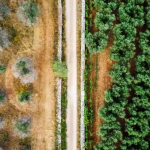
A deadly disease estimated to have killed a million olive trees in Italy has spread to France. The French agriculture ministry announced the discovery of the bacterium Xylella fastidiosa, known as olive tree leprosy, on two trees in the south of the country and said the infected trees would be destroyed to stop it spreading.

Ministry officials said the two decorative olives were found to have the same subspecies of the disease that killed an estimated 1m valuable ancient olive trees in Italy. All trees and plants vulnerable to the bacterium within a three-mile radius are to be destroyed and burned.

There is no known cure or prevention for the disease, which blocks the plant or trees’ ability to take up water. Michel Dessus, the president of the chamber of agriculture in the Alpes-Maritimes, where the two infected trees were discovered, said more tests were needed before swathes of vegetation were destroyed. “Cutting down trees more than a hundred years old needs to be thought about,” he told French television.

The disease, also called olive quick decline syndrome, which scientists believe affects more than 350 plant species, has also hit vineyards in north and south America. It was first detected in Europe in October 2013 when ancient olive trees in Puglia, Italy, began to die. Entire olive groves of more than 230,000 hectares have been cut down. Although it has been found in other plants in France and the French Mediterranean island, Corsica, it is the first time the disease has hit French olive trees that, like those in Italy, have been hit by a subspecies of the bacterium called Pauca.

In July 2016, there was an isolated infestation in an oleander plant in a commercial nursery in Saxony, but the disease was declared eradicated after the plant and those around it were destroyed. The disease is spread by insects feeding on the sap of the plants. It can also affect fruit trees including peaches, pear and plums and nuts.(The Guardian)…[+]

British Airways pilots begin two-day strike over pay

British Airways pilots have begun a two-day strike in an ongoing dispute over pay and conditions. Tens of thousands of passengers have been told not to go to airports, with the airline cancelling some 1,700 flights due to the disruption.

The pilots’ union Balpa said BA management’s cost-cuts and “dumbing down” of the brand had eroded confidence in the airline. But BA chief Alex Cruz said investment in the operator had never been so big.

Both sides say they are willing to hold further talks, but no date has been set. The pilots are currently scheduled to stage another strike on 27 September. Balpa’s general secretary, Brian Strutton, said: “It is time to get back to the negotiating table and put together a serious offer that will end this dispute.”

But he told the BBC that while BA says publicly it is willing to talk, “in private they say they are not going to negotiate”. And although the headline dispute is about pay, he said there was also deep resentment about the airline’s direction. “BA has lost the trust and confidence of pilots because of cost-cutting and the dumbing down of the brand… management want to squeeze every last penny out of customers and staff,” Mr Strutton said.(BBC)…[+]

US Supreme Court to hear convicted Jamaican in infamous DC sniper case

The United States (US) Supreme Court is to make a decision in the case of Jamaican-born Lee Boyd Malvo, who at age 17 was sentenced to life without parole for his part in the infamous DC (District of Columbia) sniper case that claimed the lives of 10 people.

“Oral argument in the case is set for Wednesday, October 16,” a Supreme Court spokesman confirmed on the weekend in an e-mail response to the Jamaica Observer. For 47 days in 2002, a thick pall of fear and tension hung over Washington and Virginia — and a traumatised nation — as the Jamaican teenager and a man whom he saw as a father figure, drove across the District shooting randomly at people on the street, eluding perplexed authorities before being finally caught.

The youngster was said to have met his then mentor, John Allen Muhammad, in Antigua where he was allegedly left by his mother. He was subsequently taken to the US by Muhammad.Malvo, now 34, along with Muhammad, was convicted for the series of murders between September 5 and October 22 that year. Muhammad, who had served in the Louisiana National Guard before joining the regular US army and also served in Iraq in 1991, was executed in Virginia in 2009 for being the mastermind behind the rampage.(Jamaica Observer)…[+]

Salvadoran prosecutors take aim, again, at woman in abortion case

SAN SALVADOR  – The attorney general’s office of El Salvador announced on Friday it will appeal last month’s acquittal of a young woman accused of killing her stillborn son, marking what would be her third trial in the socially conservative Central American country.

Evelyn Hernandez was exonerated in an August retrial after an earlier judgment found her guilty of homicide and sentenced her to 30 years in prison. Hernandez, 21, said she was raped by a gang member and was unaware of her pregnancy until just before delivering a stillborn son in early 2016.

But prosecutors want another shot at returning Hernandez to prison, where she has already severed three years behind bars, due to what they describe in a statement as “overabundant” proof of her criminal responsibility. “There’s no reason to consider her a victim of anything. On the contrary, the only victim is her son,” the statement said.

Hernandez was rushed to hospital after complications during the birth. Once there, medical staff accused her of attempting an illegal abortion and handed her over to authorities, her defense says.

El Salvador’s Supreme Court overturned the original conviction in February, ordering Hernandez released, and concluding that the judge’s decision was based on prejudice and insufficient evidence. Women prosecuted under El Salvador’s hardline abortion laws, which ban the procedure in all circumstances, include those who have suffered stillbirths after home deliveries as well as abortions induced because of medical emergencies.(Reuters)…[+]