english news

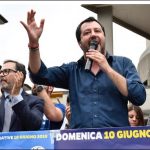
Italy: cancelled League rallies signal political impasse may soon end

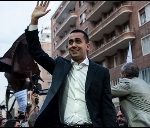
The leader of the Italian far-right party the League, Matteo Salvini, has cancelled political rallies to return to Rome, in what was seen as a sign that a political impasse that has left the country without a fully functioning government for months may soon be coming to an end. Salvini was heading back to the capital to meet his coalition partner, Luigi Di Maio, the head of the anti-establishment Five Star Movement, after the Italian president, Sergio Mattarella, gave the pair more time to form a government.

Italian press reports indicated that any agreement to form a new populist government involving the League, formerly known as the Northern League, and M5S would include the nomination – again – of Giuseppe Conte, a formerly obscure law professor, to serve as prime minister. But Di Maio and Salvini are expected to back down on their earlier insistence that Paolo Savona, a Eurosceptic who has called Italy’s adoption of the euro a “historic mistake”, should serve as finance minister. There were also small indications that the populists would try to assure the markets they were not planning any big moves to try to hasten an Italian exit from the euro – a fear that roiled markets this week.(theguardian)…[+]
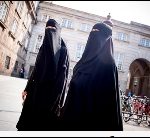
Denmark passes law banning burqa and niqab

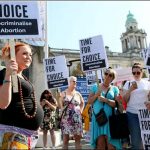
Denmark has joined several other European countries in banning garments that cover the face, including Islamic veils such as the niqab or burqa, in a move condemned by human rights campaigners as “neither necessary nor proportionate”. In a 75-30 vote with 74 absentees on Thursday, Danish lawmakers approved the law presented by Denmark’s centre-right governing coalition. The government says it is not aimed at any religions and does not ban headscarves, turbans or the traditional Jewish skull cap.

But the law is popularly known as the “burqa ban” and is mostly seen as being directed at the dress worn by some Muslim women. Few Muslim women in Denmark wear full-face veils. Those violating the law, which comes into force on 1 August, risk a fine of 1,000 kroner (£118). Austria, France and Belgium have similar laws. Following the Danish vote, Gauri van Gulik, Amnesty International’s Europe director, said: “All women should be free to dress as they please and to wear clothing that expresses their identity or beliefs. This ban will have a particularly negative impact on Muslim women who choose to wear the niqab or burqa.(theguardian)…[+]

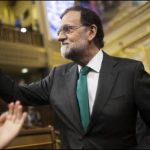
Rajoy’s future in doubt as Spanish PM faces no-confidence debate

The future of the Spanish prime minister, Mariano Rajoy, is hanging in the balance as parliament has begun debating a motion of no-confidence tabled after his People’s party (PP) was found to have profited from a huge kickbacks-for-contracts scheme. A defiant Rajoy addressed MPs early on Thursday, accusing the opposition socialist party, PSOE, of opportunism and reminding it of its corruption scandals.

“With what moral authority are you speaking? Are you perhaps Mother Teresa of Calcutta?” he asked. “There have been corrupt people in the PP, but the PP is not a corrupt party.” The no-confidence vote, scheduled to take place on Friday, is likely to be very close. The socialists need the support of 176 of the 350 MPs in congress of deputies. The votes of the five MPs of the Basque Nationalist party (PNV) will prove decisive, with the party saying it would meet and hear what the PSOE leader, Pedro Sánchez, had to say before announcing its decision. Sánchez called for “democratic regeneration” as he sought the backing of MPs, saying: “Resign, Mr Rajoy. Your time is up.”(theguardian)…[+]

Brazil faces calls for return to military dictatorship amid truckers’ strike

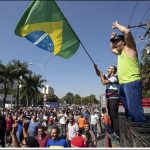
Hundreds of truckers and their supporters had gathered at a gas station on a highway near São Paulo for a rally in support of a nationwide protest that has brought South America’s biggest economy to its knees.

But among the slogans and Brazilian flags were signs not usually seen at strike demonstrations: slung from a nearby overpass were banners calling for “military intervention”, a sign that this shutdown has taken on a political dimension all of its own. As a nationwide truck strike reaches its 10th day, gas stations have finally begun to receive fuel deliveries and truckers have started drifting back to work – some unwillingly.

But hundreds of demonstrations have continued on highways across Brazil – and many of those still protesting are calling for a return to the rightwing dictatorship that ran Brazil for two sombre decades until 1985. “We need help from the military to resolve our problems in Brasília, to remove the bandits from there and to put the house in order,” said one driver, Gabriel Berestov, 44.(theguardian)…[+]

Head of Italy’s M5S rekindles negotiations to form a government

The head of Italy’s anti-establishment Five Star Movement has rekindled negotiations to form a government, days after a bitter row over the country’s future in the eurozone ended a fledgling deal for populist parties to take power. Luigi Di Maio, the 31-year-old head of M5S, Italy’s largest party, indicated on Wednesday he was prepared to compromise on his controversial choice of a eurosceptic economist, Paolo Savona, for finance minister. But he insisted that his pick for prime minister remained political newcomer Giuseppe Conte.

In the absence of an agreement between Di Maio , the president of Italy, Sergio Mattarella, and the far right leader Matteo Salvini, Di Maio said he favoured snap elections. “There are two paths ahead. Either we launch the Conte government with a reasonable solution or we vote right away,” he said.(theguardian)…[+]

Brexit: UK may get poorer access than Israel to EU science scheme

Theresa May’s appeal for a special Brexit deal on science and research collaboration, worth billions to the British economy, is being stonewalled by Brussels as it prepares to offer an arrangement less privileged and more expensive than that given to non-EU states such as Israel.

The European commission’s negotiators refused to discuss the issue in formal talks last week, instead insisting they would present the UK with conditions of entry for a “third country” into its €97.9bn research programme once they had been formally published. A draft copy of the so-called Horizon Europe document, seen by the Guardian, suggests that the UK is set to be offered less generous access than countries with associate status in the current programme, known as Horizon 2020, including Israel, Turkey, Albania and Ukraine.

Those states, along with countries in the European Free Trade Association (EFTA) – Iceland, Liechtenstein, Norway and Switzerland – will be “associated to all programme parts” of the new research and science framework, of which details are to be published on 7 June, according to the leaked document. It is understood that wealthy countries with a developed research and development capacity are to be offered a greater opportunity to pay in and collaborate with the EU under a reform of the current programme, which will end in 2020. However, the UK is set to join Canada and South Korea in the category of countries that will have to pay a higher price for the privilege of collaborating, while being barred from a particular raft of programmes designed to encourage innovation.(theguardian)…[+]

No plans to intervene on Northern Ireland abortion law, says No 10

Theresa May has no plans to help liberalise abortion rights in Northern Ireland following the Irish referendum result, Downing Street has said, insisting any change can only be made by the region’s devolved assembly, which collapsed 16 months ago.

The prime minister has faced intense political pressure over the law in Northern Ireland, where abortion remains illegal except in exceptional circumstances, after voters in the Republic of Ireland strongly backed liberalisation. But while May indicated her support for the Irish referendum decision in a tweet over the weekend, she would risk alienating the Democratic Unionist party MPs who support her government and who back the existing law if she sought to move on the matter from Westminster.

Asked what might happen to Northern Ireland’s abortion laws, which do not make exceptions for conceptions by rape or incest and which allow for a maximum sentence of life in jail, May’s spokesman said it was a matter for the devolved Northern Ireland government. “The prime minister said on Sunday that the Irish referendum was an impressive show of democracy, which delivered a clear result, and she congratulated the Irish people on the decision,” he said. “But it’s important to recognise that the people of Northern Ireland are entitled to their own process, which is run by locally elected politicians.(theguardian)…[+]

Belgium shooting: man kills passerby and two police officers in Liège

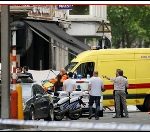
A gunman has killed two police officers and a passerby before being shot dead in the centre of the Belgian city of Liège, public broadcaster RTBF has said. La Libre Belgique newspaper quoted a police source as saying the gunman shouted Allahu Akbar – “God is greatest” in Arabic – and had taken a woman hostage at some point in the attack.

The national anti-terrorist crisis centre, which interior minister Jan Jambon said was monitoring the situation, said terrorism could not be excluded as a motive though it was also looking into other possible reasons. “It is one of the questions on the table, but for the moment all scenarios are open,” a spokesman for the crisis centre said.

Two other police officers had been injured, Belga news agency said. A spokeswoman for the Liège public prosecutor’s office said two police officers had been shot dead and the gunman “neutralised” but could not confirm other details. Images on social media showed people scurrying for safety on Liège’s central Boulevard d’Avroy, with shots and sirens being heard in the background.(theguardian)…[+]

Italy at risk of new financial crisis in wake of coalition’s collapse

Italy risked careening into a new financial crisis amid a warning from the Bank of Italy that the country’s leaders could not “disregard” fiscal constraints and its treaties.

The remarks by Ignazio Visco, chairman of the Bank of Italy, who said the country was at risk of losing the “asset of trust”, came as markets were hit once more, with investors and senior politicians in Brussels growing more alarmed that the mood against the euro in Italy is strengthening. The yield on two-year bonds rose to 2.442%, the highest level in four years. The political crisis was set off late last week when the leaders of the country’s biggest populist parties – Luigi Di Maio of the the anti-establishment Five Star Movement (M5S) and Matteo Salvini of the far-right Lega – insisted that the Italian president, Sergio Mattarella, approve their choice of a finance minister, Paolo Savona, who is a fierce critic of the euro. Mattarella vetoed the nomination – a power that he is given in the Italian constitution – but faced an immediate backlash and the collapse of the incoming populist government before it even took power.(theguardian)…[+]

Brexit indigestion: row brewing over call for UK laws to protect likes of cognac and feta

Feta cheese, Parma ham, French cognac and Belgium’s sour lambic beers are the latest cause of indigestion in Brexit talks, after the EU stepped up demands on the UK to legislate to preserve the status of European speciality produce.

EU special status for regional food and drink has emerged as a new sticking point in the negotiations, following a bad-tempered week of discussions in which the two sides clashed over the Galileo satellite system, and the EU’s chief Brexit negotiator, Michel Barnier, told the UK government to stop playing “hide and seek” over its goals.

In a demand likely to infuriate Brexiter backbenchers, the European commission is calling on the British parliament to legislate to protect a few thousand protected food and drink products from copycats. The EU wants the UK to adopt a near equivalent to its system of “geographical indications” – labels that protect a product linked to a region. Barnier has said geographical indications are among the issues that must be settled before the UK can have an exit deal, including a 21-month transition period.

But after fractious talks in Brussels last week, a senior EU official said they were proving to be another “difficult issue … where the UK has no position”. “At the moment, we do not have any indication if they intend to protect geographical indications on their market beyond Brexit,” they said. An EU position paper published last September said “necessary [UK] domestic legislation” must be “comparable to that provided by union law”.(theguardian)…[+]