english news

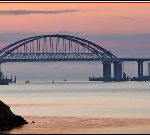
Putin opens 12-mile bridge between Crimea and Russian mainland

Vladimir Putin has opened a bridge between the Russian mainland and Crimea, tightening Russia’s hold over the contested peninsula, which Moscow annexed from Ukraine in 2014. The 12-mile (19km), $3.7bn (£2.7bn) bridge is Moscow’s only direct road link to Crimea. Russia expects it will carry millions of cars and rail travellers and millions of tons of cargo each year. Previously, all car traffic passed over the Kerch strait by ferry or by passing through Ukraine.

Relations between Russia and Ukraine remain extremely fraught as a simmering conflict continues between Kiev and Moscow-backed separatists in Ukraine’s south-east. In 2016 the US imposed sanctions on Russian companies that were helping to build the bridge across the Kerch strait. Ukraine has said the construction of the bridge shows blatant disregard for international law.(theguardian)…[+]

Sergei Skripal briefed European intelligence services, reports say

The former Russian spy Sergei Skripal gave briefings to European intelligence services in the years before the attempt on his life, which may offer a motive for why Moscow allegedly targeted him with a deadly nerve agent. Skripal was a regular lecturer in the US and Europe for at least a decade, speaking at universities and military academies and to other groups interested in intelligence.

However, Whitehall sources said the revelation he spoke on the lecture circuit, as other spies had done before him, neither explained nor justified the nerve agent attack. Although his operational knowledge ended with his arrest in Russia in 2004, Skripal was still regarded as being of value because of his inside knowledge of the workings of Russian military intelligence.

According to the Czech magazine Respekt, Skripal visited Prague in 2012 and held discussions with Czech intelligence. He briefed security officers on Kremlin espionage methods, with the meeting described as “beneficial”. Members of Czech intelligence subsequently met Skripal in the UK at least once, the magazine reported.(theguardian)…[+]

Turkey’s president blames US for returning world to ‘dark days’

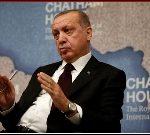
The Turkish president, Recep Tayyip Erdoğan, has said the world is living in dark times reminiscent of the years leading up to the second world war as he lambasted decisions by Donald Trump to pull out of the Iran nuclear deal and recognise Jerusalem as the Israeli capital. Offering himself as the spokesman of the Muslim Middle East, he also criticised Europe for not doing as much as Turkey to help 3.5 million Syrian refugees, adding the EU had never fulfilled its part of a refugee deal with Turkey by providing promised cash.

Erdoğan was speaking at the thinktank Chatham House in London on the second day of a UK state visit. It has turned into part of his election campaign as a result of his decision to bring forward the date of the Turkish parliamentary and presidential elections by a year to 24 June. Theresa May, eyeing a post-Brexit free trade deal with Turkey, as well as security cooperation over returning foreign fighters, has taken a strategic bet on Turkey that has led to criticism of the Conservatives’ willingness to overlook Erdoğan’s increasingly authoritarian rule in pursuit of commercial agreements. Nick Clegg, the former Liberal Democrat leader, picked out the environment secretary, Michael Gove, accusing him of “a fawning silence” over Erdoğan’s visit despite promising Brexit would give the UK a chance to promote human rights under the banner of “global Britain”.(theguardian)…[+]

Catalonia’s parliament elects hardline secessionist as president

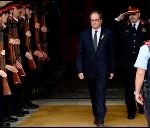
The Catalan parliament has narrowly elected a hardline secessionist as president, presaging the end of 199 days of direct rule from Madrid. Quim Torra, an uncompromisingly pro-independence MP who joined parliament six months ago, was elected by 66 votes to 65. He is the first candidate to be approved by the body since Carles Puigdemont’s administration was sacked seven months ago, when the Spanish government used the constitution to assume control of Catalonia and call last December’s regional election.

The Madrid government has said it will cease using article 155 of the constitution – which had never been invoked until last year – when a new Catalan government was in place. Torra is the anointed successor to Puigdemont, who has been in self-imposed exile since October, first in Brussels and now in Berlin, where he awaits the German court’s decision on Spain’s extradition request on charges of rebellion and misuse of public funds. Puigdemont and the other politicians who have either fled abroad or been imprisoned were able to vote by proxy.(theguardian)…[+]

Parkland survivors meet man who took AR-15 from Waffle House gunman

In Miami on Saturday, survivors of the Parkland school shooting met James Shaw Jr, the man who grabbed the hot muzzle of an AR-15 and wrestled it away from a gunman who killed four people and injured four at a Waffle House in Tennessee.

Seventeen people were killed and 17 injured in the Florida shooting, at Marjory Stoneman Douglas High School on 14 February. “I met one of my heros today,” Shaw tweeted, below a picture taken with Emma Gonzalez, one of the leaders of the Parkland students’ push for gun control reform which led to emotional speeches at the March for Our Lives in Washington in March.

Another prominent voice in that movement, David Hogg, tweeted his own selfie with Shaw, saying: “Wow just, wow @JamesShawJr9 lots of work ahead but the young people will win.” Shaw responded: “Thank you great meeting you all, let’s keep inspiring and bringing ppl together.” Another Parkland survivor, Samantha Fuentes, had something to celebrate. Three months after the attack, she said: “My face is finally shrapnel free!”

Fuentes tweeted a photo of her face on Saturday, showing a wide smile despite bruises and a hospital bandage stretching from her ear to her mouth. “Regardless of the fact I look like I lost a fight, inside I’m winning in a way. I’ve been struggling so hard to love my face again, thank you for all your support,” she wrote.(theguardian)…[+]

Lesbian teacher claims discrimination after showing class photo of future wife

A Texas teacher has filed a lawsuit alleging she was put on leave and transferred after showing her class a photograph of her future wife. Stacy Bailey has twice been named teacher of the year at Charlotte Anderson elementary school in Arlington, Texas. Last August, at the start of a new school year, she put on a getting-to-know-you slideshow. It included pictures of her family and friends, including a woman Bailey described as her “future wife”.

Later in the week, according to a court filing, Bailey was told a parent had complained about the art teacher promoting a “homosexual agenda”. According to the lawsuit, a school district official met Bailey and told her: “You can’t promote your lifestyle in the classroom.” The suit says Bailey responded: “We plan to get married. When I have a wife, I should be able to say this is my wife without fear of harassment. When I state that, it is a fact about my life, not a political statement.” The official is quoted as replying: “Well right now it kind of is.”

The court document says Bailey was asked to resign in October but refused, and that the school district, Mansfield ISD, near Dallas, voted to renew her contract last month but plans to transfer her to a secondary school. The federal lawsuit seeks damages and alleges Bailey was put on administrative leave, endured improper public discussion of her employment status and was considered unsuitable to teach at elementary level “all because of her sexual orientation and status as a lesbian”. She married her fiancee, Julie Vazquez, earlier this year. “We’ve been in disbelief,” Vazquez said at a news conference. “We’ve been shocked. We’ve been hurt deeply.”(theguardian)…[+]

South African photographer Sam Nzima dies aged 83

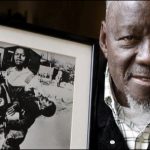
The South African photographer who captured the famous black-and-white picture of a dying 13-year-old activist shot by apartheid police during the 1976 Soweto uprising has died. Sam Nzima died aged 83 in hospital on Saturday in the country’s Mpumalanga province, the presidency said on Sunday.

His photograph of a dying Hector Pieterson being carried away by a distraught fellow student after security forces opened fire on young people protesting in Soweto township on 16 June 1976 turned the world’s attention to the brutality of the apartheid regime. Those riots, led by high school students, became a watershed in South Africa’s anti-apartheid struggle. Over three days, at least 170 people were killed, with some estimates putting the death toll at several hundred over the following month.

Protests spread across South Africa and a new era of black activism emerged that eventually led to the fall of the apartheid regime and Nelson Mandela’s election as president in 1994.(theguardian)…[+]

Spanish newsreaders wear black in protest against ‘political interference’

For the third Friday in a row, journalists working for Spain’s public broadcaster have worn black on screen to protest against alleged political interference, gender bias and unequal pay. The campaign, known as viernes negro (black Friday), is intended to highlight the Spanish government’s continuing refusal to approve a transparent process to appoint an independent board at RTVE.

Protesters argue that the ruling conservative People’s party (PP) meddles in media coverage and has a vested interest in appointing the RTVE chair directly. “For the third consecutive week, RTVE workers are wearing black this Friday to protest against the parliamentary impasse that is hindering the establishment of a public competition to choose the leadership team and restore RTVE’s professional judgment,” the group RTVE Women said in a statement.(theguardian)…[+]

Sunset at Persepolis: Iranians fear Trump has killed tourism boom

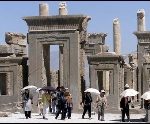
Thanks to its glittering mosques, breathtaking landscapes, ancient ruins and, believe it or not, ski resorts, Iran’s tourism industry underwent an extraordinary boom after the landmark 2015 nuclear deal. Tourists flocked to the Middle Eastern country to discover cultural treasures largely unseen by western eyes since the 1979 Islamic revolution, and found the cost of staying there relatively cheap.

But this week’s decision by Donald Trump to pull the US out of the agreement, which could trigger its collapse and inflame an already tense region, is stoking fears that Iran’s tourism sector could slide back into the doldrums. “After Barjam [the Persian acronym for the joint comprehensive plan of action on Iran’s nuclear programme] we saw a huge growth in our tourism sector – I worked as a guide all year long,” said Ali Sheibani, a 30-year-old Iranian tour guide.

He has been operating for seven years in Isfahan, the country’s top tourist destination, and Shiraz, close to Persepolis, with its relics of a proud ancient civilisation. “Before [the deal],” he said, “if you’d see a foreign tourist, it was as if you were seeing an alien, someone from space, and people would encircle them to talk to them. Foreign tourists would be treated as celebrities – but now it’s less like that. It has become common to see tourists.”(theguardian)…[+]

‘Astonishing’ CIA memo shows Brazil’s ex-dictator authorized torture and executions

Brazil’s former dictator Ernesto Geisel personally approved the summary execution of his regime’s perceived enemies, according to a newly unearthed CIA memo that has reopened a bitter debate over one of the darkest chapters of contemporary Brazilian history.  Matias Spektor, the São Paulo-based academic who discovered and distributed the document on Thursday, called it “the most disturbing I have read in 20 years of research”.

The memorandum, sent to then secretary of state, Henry Kissinger, by the CIA director, William Colby, on 11 April 1974, details a meeting it said had taken place a few days earlier between Geisel and three Brazilian generals. One tells Geisel, who ruled Brazil from 1974 until 1979, the regime “cannot ignore the subversive and terrorist threat” it faces. “Extra-legal methods should continue to be employed against dangerous subversives,” Gen Milton Tavares de Souza is quoted as saying.

De Souza informs Geisel that 104 such “subversives” were summarily executed by military intelligence in the previous year – a policy a second general insists should continue. According to the US account, Geisel notes that such killings could be “potentially prejudicial” and asks for a few days to consider whether such tactics are appropriate. The following week Brazil’s president concludes “the policy should continue but that great care should be taken to make certain that only dangerous subversives were executed”.(theguardian)…[+]