english news

How Europe’s ‘breakthrough’ privacy law takes on Facebook and Google

Despite the political theatre of Mark Zuckerberg’s congressional interrogations last week, Facebook’s business model isn’t at any real risk from regulators in the US. In Europe, however, the looming General Data Protection Regulation will give people better privacy protections and force companies including Facebook to make sweeping changes to the way they collect data and consent from users – with huge fines for those who don’t comply. “It’s changing the balance of power from the giant digital marketing companies to focus on the needs of individuals and democratic society,” said Jeffrey Chester, founder of the Center for Digital Democracy. “That’s an incredible breakthrough.” Here’s a simple guide to the new rules.

It is a regulation that requires companies to protect the personal data and privacy of residents of EU countries. It replaces an outdated data protection directive from 1995 and restricts the way businesses collect, store and export people’s personal data.

“Consumers have been abused,” said David Carroll, an associate professor at Parsons School of Design in New York. “Marketers have succeeded in making people feel powerless and resigned to getting the short end of the bargain. GDPR gives consumers the chance to renegotiate that very unfair deal.”(theguardian)…[+]

Black men arrested at Philadelphia Starbucks feared for their lives

Two black men arrested at a Philadelphia Starbucks said they were just waiting for a business meeting – and a week later still wonder how that could have escalated into a police encounter that left them fearing for their lives. Rashon Nelson and Donte Robinson spoke to the Associated Press in their first interview since video of their 12 April arrests went viral. Robinson said he thought about his loved ones and how the afternoon had taken such a turn as he was taken to jail. Nelson wondered if he would make it home alive. “Anytime I’m encountered by cops, I can honestly say it’s a thought that runs through my mind,” Nelson said. “You never know what’s going to happen.”

The arrests, recorded on a white customer’s cellphone video, galvanized people around the country who saw the exchange as an example of racism. The men have met with the CEO of Starbucks and are pushing for meaningful change so what happened to them does not happen to anyone else.

Police this week released a recording of the call from the Starbucks employee that led to the arrest. In it, a woman is heard saying the men refused to “make a purchase or leave”. Starbucks has promised to shut all 8,000 company-owned stores across the US on 29 May to train employees about unconscious bias.

Nelson initially brushed it off when the Starbucks manager told him he couldn’t use the restroom because he wasn’t a paying customer.  He thought nothing of it when he and Robinson, his business partner, were approached at their table and were asked if they needed help. The 23-year-old entrepreneurs declined, explaining they were just waiting for a business meeting.  A few minutes later, they hardly noticed when the police walked into the coffee shop until officers started walking in their direction.(theguardian)…[+]

Great Barrier Reef: 30% of coral died in ‘catastrophic’ 2016 heatwave

Scientists have chronicled the “mass mortality” of corals on the Great Barrier Reef, in a new report that says 30% of the reef’s corals died in a catastrophic nine-month marine heatwave. The study, published in Nature and led by Prof Terry Hughes, the director of the ARC Centre of Excellence for Coral Reef Studies, examined the link between the level of heat exposure, subsequent coral bleaching and ultimately coral death. The extent and severity of the coral die-off recorded in the Great Barrier Reef surprised even the researchers. Hughes told Guardian Australia the 2016 marine heatwave had been far more harmful than historical bleaching events, where an estimated 5% to 10% of corals died.

“When corals bleach from a heatwave, they can either survive and regain their colour slowly as the temperature drops, or they can die,” Hughes said. “Averaged across the whole Great Barrier Reef, we lost 30% of the corals in the nine-month period between March and November 2016.” The scientists set out to map the impact of the 2016 marine heatwave on coral along the 2,300km length of the Great Barrier Reef. They established a close link between the coral die-off and areas where heat exposure was most extreme. The northern third of the reef was the most severely affected.(theguardian)…[+]

OPCW rejects Russian claims of second Salisbury nerve agent

Senior figures from the global chemical weapons watchdog have flatly rejected Russian claims that the watchdog’s laboratories had found a western military chemical agent in the poison that incapacitated the Russian double agent Sergei Skripal.

In a weekend claim widely picked up on social media, the Russian foreign minister, Sergei Lavrov, said that a Swiss laboratory used by the Organisation for the Prohibition of Chemical Weapons had discovered traces in the sample of the nerve agent BZ and its precursors. The nerve agent is possessed by Nato countries, but not Russia. The Russian embassy in London said it was “highly likely” that BZ had therefore been used in Salisbury, adding that the OPCW and the British had questions to answer.

But at a meeting of the OPCW executive in The Hague, the Russian claim was refuted by OPCW officials, who said explained that BZ had been used in the control sample, not the sample itself. It is also a breach of OPCW procedures to identify a laboratory involved in a test. The UK said Russia had been caught out in an attempt to mislead the international community, adding the OPCW report showed the world was facing “a clear case of a new family of toxic chemicals intended to kill”.(theguardian)…[+]

Chemical weapons inspectors’ security team fired on in Douma

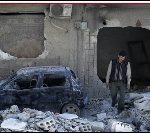
A UN security team doing reconnaissance at the site of an attack in the Syrian town of Douma has come under gunfire, the head of the Organisation for the Prohibition of Chemical Weapons has said, further delaying the arrival of chemical weapons inspectors. The OPCW director general, Ahmet Üzümcü , told a meeting at the organisation’s headquarters in The Hague on Wednesday that the security team had been forced to withdraw. Üzümcü said that when a reconnaissance team arrived at one site, a large crowd gathered and the team withdrew. At a second site “the team came under small-arms fire and an explosive was detonated. The reconnaissance team returned to Damascus.” The delay in the inspectors’ arrival, 10 days after the attack, will raise fresh concerns over the relevance of the OPCW investigation and possible evidence-tampering.(theguardian)…[+]

Nerve agent used to attack Sergei Skripal was liquid, says Defra

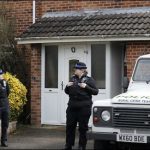
The nerve agent used to poison Sergei Skripal and his daughter, Yulia, in Salisbury was delivered in a liquid form, the Department for Environment, Food and Rural Affairs has said. A very small amount of the novichok nerve agent was used in the attack and the highest concentration was found at Skripal’s house, it emerged in a press briefing in the city. Work to decontaminate sites in Salisbury affected by the nerve agent is beginning, but will take months and involve almost 200 members of the armed forces. Nine sites had been identified as needing some sort of specialist cleaning, Defra said.

They include part of the Maltings shopping centre where the former Russian spy Skripal and his daughter collapsed, the Zizzi restaurant and Mill pub which they visited that day, and the family home on the outskirts of the city. The home of the police officer injured in the incident, DS Nick Bailey, also needs decontaminating.

Police previously said that they believed the pair had been poisoned at the front door of Skripal’s home. Specialists found the highest concentration of the nerve agent on the door, police said. Last week previously classified intelligence about the Salisbury attack claimed Russia had tested whether door handles could be used to deliver nerve agents. A small cordoned area of the cemetery where the remains of Skripal’s wife and son lie has been reopened after “extensive investigations and testing” established that it was not contaminated.(theguardian)…[+]

EU to force tech firms to hand over terror suspects’ messages

The European commission is seeking to force technology companies wherever they are based in the EU to hand over emails, text messages and app communications of terror suspects within hours of a court order. Under the plans, judges in one member state will be able to seize electronic evidence held on a service provider in another European country through a transnational European production order.

The powers would further cover the seizure of data held outside the EU by a tech company “offering services in the union and established or represented” in an EU member state. The information will have to be handed over by the service provider within 10 days of receiving the warrant, or as little as six hours in emergency cases.

Currently, depending on the legal vehicle, the time limits before which the tech companies need to respond to national courts can vary between 120 days to 10 months. Frans Timmermans, the European commission’s vice-president, said: “Electronic evidence is increasingly important in criminal proceedings. We cannot allow criminals and terrorists to exploit modern and electronic communication technologies to hide their criminal actions and evade justice.(theguardian)…[+]

Macron: political divisions in Europe are like a civil war

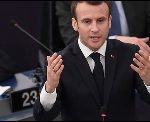
Emmanuel Macron has likened the political divisions in Europe to a civil war and warned against growing illiberalism on the continent. In his first speech to the European parliament, the French president called for the defence of a European liberal democracy that offered protection of the rights of its minorities, and attacked those who took their countries out of the EU to pursue fairytale “adventures”.“I am for the most integrated and closest possible relationship after Brexit, and there’s a well-known solution – it’s called EU membership,” he said.

The vast majority of the speech was, however, about the future without the UK, and the need for the 27 other EU member states to be united in opposition to the emergence of the nationalist authoritarian traits of the past. Without naming the Hungarian prime minister, Viktor Orbán, who recently won a landslide victory after a campaign that played on voters’ fears of immigration, Macron was scathing of politicians who scapegoated migrants.  “There seems to be a certain European civil war: national selfishness and negativity seems to take precedence over what brings us together. There is a fascination with the illiberal, and that is growing all the time,” he told MEPs. “In the future, we must struggle to defend our ideals … This is a democracy that respects individual minority fundamental rights, which used to be called liberal democracy, and I use that term by choice. The deadly tendency which might lead our continent to the abyss, nationalism, giving up of freedom: I reject the idea that European democracy is condemned to impotence.(theguardian)…[+]

Japan’s Shinzo Abe tipped to resign in June as cronyism scandals take toll

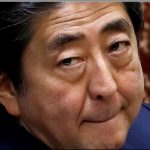
Japan’s prime minister, Shinzo Abe, is likely to resign in June after two cronyism scandals sent his approval ratings to an all-time low and risk damaging his party’s fortunes in elections next year, according to one of Japan’s most popular postwar leaders. Junichiro Koizumi, a flamboyant reformer who was prime minister from 2001-06, told a weekly magazine published on Monday that Abe has found himself in a “dangerous” situation over the scandals, adding: “Won’t he resign around the time the current parliamentary session ends [on 20 June]?”Speaking to Aera magazine, Koizumi said Abe could harm his Liberal Democratic party’s chances in next summer’s upper house elections if he manages to cling on to the LDP presidency in a leadership election due in September.

Abe has been badly bruised by allegations of cronyism centering on the heavily discounted sale of public land to the operator of an ultra-nationalist kindergarten in Osaka with links to his wife, Akie Abe. He has consistently denied any wrongdoing, and said he would resign if he or his wife were shown to have been intervened in the sale of the land.

The finance ministry recently admitted to tampering with documents to remove references to Abe and his wife in papers relating to the decision to provide an 85% discount on the appraised value of the land. He is also alleged to have used his influence to help a friend secure permission to open a veterinary school – claims he has rejected. Last week, however, an official document emerged describing the veterinary school as “an issue that involves the prime minister”.

Although he shares Abe’s hawkish views on defence, Koizumi has emerged as a vocal critic of the prime minister’s support for nuclear power. Abe wants to expand nuclear’s share of the energy mix, while Koizumi has called for its abolition following the March 2011 meltdown in Fukushima.(theguardian)…[+]

Arrest of two black men at Starbucks for ‘trespassing’ sparks protests

About two dozen chanting protesters have entered a Philadelphia Starbucks where two black men were arrested after store employees called 911 to say the men were trespassing. The protesters moved to the front counter shortly after 7 am on Monday and chanted “Starbucks coffee is anti-black” and “We are gonna shut you down”.

“We don’t want this Starbucks to make any money today. That’s our goal,” said Abdul-Aliy Muhammad, one of the protest’s organizers and co-founder of the Black and Brown Workers Collective.

The protesters gathered outside the store in the pouring rain before 7am, while inside it looked like business as usual. However, most people drinking coffee at the tables were regional leaders for the company’s corporate side. Just before 7.30am, the protesters moved inside and stood in front of the counter, some holding banners reading “End Stop and Frisk,” chanting slogans like, “A whole lot of racism, a whole lot of crap, Starbucks coffee is anti-black.”

Speeches decried police brutality and gentrification. Starbucks regional vice president Camille Hymes attempted to talk to the protesters, but was shouted down. Over the weekend, demonstrators called for the firing of the employee who had contacted police, who arrested the men on Thursday. Officials have said police officers were told the men had asked to use the store’s restroom but were denied because they had not bought anything and they refused to leave. Police have not released the names of the men who were arrested and later released after the district attorney’s office said there was lack of evidence that a crime had been committed.(theguardian)…[+]