
Rodrigo Duterte is to withdraw the Philippines from the international criminal court after it opened a crimes against humanity investigation into his brutal war on drugs. In a lengthy statement, the Philippines president accused the ICC and the UN of a crusade against him, denouncing what he described as “baseless, unprecedented and outrageous attacks on my person”. “I therefore declare and forthwith give notice, as president of the republic of the Philippines, that the Philippines is withdrawing its ratification of the Rome statute [the treaty that established the ICC] effective immediately,” said Duterte. The ICC announced last month it was investigating allegations that Duterte had committed crimes against humanity in his war on drugs, which has killed an estimated 8,000 people since he took office in May 2016.(theguardian)…[+]
english news
May expels 23 Russian diplomats in response to spy poisoning

The UK is to expel 23 Russian diplomats, consider new laws to combat spying and look at sanctions as part of a sweeping response to the nerve agent attack in Salisbury, Theresa May has told parliament. In a statement to MPs after the expiry of a midnight deadline to Russia to explain how one of its nerve agents was used in the attempted murder of Sergei Skripal and his daughter, the prime minister told parliament the expulsions were the biggest such move for 30 years. The UK would also cut off all top-level ties with Russia, including revoking an invitation to the Russian foreign minister, Sergei Lavrov, to visit the UK, and would not send ministers or royals to the football World Cup this summer, May said.
The statement followed an announcement by the Foreign Office that the UK had called for an urgent meeting of the UN security council to update council members on the investigation. EU leaders will also discuss the incident at a summit next week, said the European council president, Donald Tusk. May said Russia had treated a UK request to explain how the military-grade nerve agent novichok was used in the attack with “sarcasm, contempt and defiance”, and had offered no credible explanation for it.(theguardian)…[+]
Sri Lanka accuses Facebook over hate speech after deadly riots
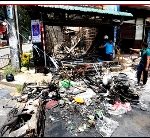
The Sri Lankan government has accused Facebook of failing to control rampant hate speech that it says contributed to anti-Muslim riots last week that left three people dead and the country under a state of emergency. As mobs of hardline Buddhists rioted and lit fires in towns in the central district of Kandy, Facebook, WhatsApp and several other platforms were blocked across the country.
Harin Fernando, the telecommunications minister, said the government had taken the unprecedented step in response to fears that widely circulated videos claiming to show mosques and Buddhist temples being torched would ignite further violence. “This whole country could have been burning in hours,” Fernando told the Guardian. “Hate speech is not being controlled by these organisations and it has become a critical issue globally.” On Thursday Fernando, along with the Sri Lankan prime minister, Ranil Wickremesinghe, and communications officials, will meet a Facebook team that has flown to Colombo. The Sri Lankans will demand a new, faster system for taking down posts flagged as a national security risk by agencies in the country.(theguardian)…[+]
Belgian monks round on supermarket for selling their brew at £9 a bottle

Even at £9 a bottle, beer from Saint Sixtus abbey was flying off the supermarket shelves. Until the monks found out. Angry Trappists from the 19th-century Cistercian monastery in Westvleteren, west Flanders, have accused the Dutch supermarket brand Jan Linders of a breach of their “ethical values” for selling the brew. Under the abbey’s rules, the beer, produced on-site by 20 monks, is only available by the glass at a “meeting centre” or by the crate under strict conditions. Indeed, according to the Saint Sixtus abbey’s website, those seeking to buy bottles of Westvleteren in bulk must have “a lot of patience and luck”.(theguardian)…[+]
Russian exile Nikolai Glushkov found dead at his London home
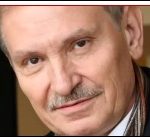
A Russian exile who was close friends with the late oligarch Boris Berezovsky has been found dead in his London home, according to friends. Nikolai Glushkov was discovered by his family and friends late on Monday night, aged 68. The cause of death is not yet clear. One of his friends, the newspaper editor Damian Kudryavtsev, posted the news on his Facebook page.
Without confirming the man’s name, the Metropolitan police said the counter-terrorism command unit was leading the investigation into the death “as a precaution because of associations that the man is believed to have had”. It said there was no evidence at present to suggest a link to the incident in Salisbury, where Sergei and Yulia Skripal remain in a critical condition. “An investigation is under way following the death of a man in his 60s in Kingston borough,” the said police, who were called by the London ambulance service at 10.46pm to reports of a man found dead at a residential address in New Malden.(theguardian)…[+]
CDEMA to improve disaster response with new procurement procedures

BRIDGETOWN – The Caribbean Disaster Emergency Management Agency (CDEMA), with support from the Caribbean Development Bank (CDB), has developed, and will implement new procurement and contract management procedures to facilitate a more streamlined and efficient use of their resource pool, including disaster management funds. After conducting a routine assessment of its operations, geared toward the continual improvement of financial management practices, a number of recommendations for improving the Unit’s procurement system were identified. Updating the existing procurement manual to address gaps related to procurement and contract management was among the suggestions.
CDB’s support included providing training and financing consultancy services to prepare a procurement and contract management manual that will act as a practical guide to CDEMA’s staff. The new procurement and contract management framework was presented to participants from 13 of CDEMA’s 18 Participating States on March 7 during a one-day workshop at the Bank.
During the workshop, officers from the Region’s National Disaster Offices were trained in the new procedures, and tabled their queries about the new manual, which will apply to procurement undertaken within Participating States for future CDEMA CU projects and activities.(CDB)…[+]
Dutch prosecutors to investigate euthanasia cases after sharp rise

Criminal investigations have been launched into four cases of euthanasia in the Netherlands after a sharp rise in the number of doctor-assisted deaths.
The cases follow the opening of a criminal inquiry last year into the euthanasia of a 74-year-old woman who was described by prosecutors as “seriously demented” and legally incapable of choosing whether to die or not. The law in the Netherlands changed in 2002 to allow doctors to end the life, on request, of people in “unbearable suffering”, for whom there is no prospect of improvement. About 7,000 people were euthanised by doctors in 2017, according to official records, up from 4,188 five years ago. There is yet to be a single prosecution of a doctor involved but concerns have been raised that assisted death is becoming normalised. Last year the country’s public prosecution department updated its rules to focus on whether a patient made a voluntarily and carefully considered choice, and whether their suffering was unbearable and hopeless.(theguardian)…[+]
Narcopisos: Spain’s ‘drug flats’ give focus for fight against heroin threat
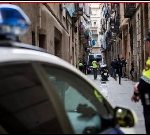
The heroin dealers of El Raval do not discriminate and nor does their product. “We’ve seen executives in suits and ties arrive by taxi at six in the morning, couples, pregnant women, people with every type of disability, teenagers,” says Carlos, a resident of the central Barcelona district. Carlos – no one round here offers their surname – is the spokesman of the Robadors-Picalquers-Roig neighbourhood association, named after three of the El Raval streets where narcopisos, or drug flats, have sprung up like mushrooms.
The empty properties, many of which are owned by banks and investment funds following Spain’s property crash, serve as distribution-points-cum-shooting galleries; places where people come to buy, smoke and inject cheap heroin. Three decades after the drugs epidemic that ravaged Spain in the 1980s, the proliferation of narcopisos in Barcelona, Madrid, Seville and Valencia is a reminder that heroin is far from gone – even if times have changed. Today, dealers use apps to help customers find the flats where drugs are available. They also tie coloured cloths to balconies to signal availability: white for heroin available, blue meaning they are under police surveillance, and red for out of stock.(theguardian)…[+]
Saving the albatross: ‘The war is against plastic and they are casualties on the frontline’
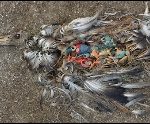
We are living in a plastic age and the solutions may seem glaringly obvious, so why aren’t all 7.6 billion of us already doing things differently? Shocking statistics don’t guarantee effective change. So what’s the alternative? American photographer and filmmaker Chris Jordan believes the focus should be on forcing people to have a stronger emotional engagement with the problems plastic causes. His famous photographs of dead albatross chicks and the colourful plastic they have ingested serve as a blunt reminder that the planet is in a state of emergency.
While making his feature-length film Albatross, Jordan considered Picasso’s approach: “The role of the artist is to respect you, help you connect more deeply, and then leave it up to you to decide how to behave.”
Most nature documentaries devote their final few minutes to hopeful solutions, but Jordan avoids this. He simply shines a light on the crisis facing the huge colonies of Laysan albatrosses on the remote Pacific island of Midway. “There’s something so archetypal about these legendary birds and seeing bright colours of ocean plastic against dead sterility is a powerful symbol for our human culture right now. We’re in a state of emotional bankruptcy,” says Jordan.(theguardian)…[+]
Russia says it has successfully launched powerful new missile

Russia has said it successfully launched a hypersonic missile described by Vladimir Putin as an ideal weapon when he unveiled new armaments earlier this month. The Kinzhal missile was launched from a MiG-31 aircraft that took off from an airfield in south-western Russia, the defence ministry said.
“The launch went according to plan: the hypersonic missile hit its target,” the ministry said. It released footage of two pilots preparing for a flight and then running towards a jet carrying a large missile. Set to rousing, patriotic music, the video showed a missile detaching from the airborne plane and gliding across the sky, leaving a fiery trail.
The Kinzhal missile was one of the weapons the Russian president unveiled in his state of the nation address earlier this month, ahead of a presidential election on 18 March that he is all but guaranteed to win. The US defence secretary, James Mattis, said that nothing Putin showed off changed anything from the Pentagon’s perspective, as he spoke to reporters as he travelled to Oman.(theguardian)…[+]