english news

UN chief and rights groups raise concerns over Rohingya deal

Concerns are growing among United Nations agencies and humanitarian groups over an agreement between the Bangladesh and Myanmar governments to repatriate several hundred thousand Rohingya refugees within two years. Bangladesh state media reported on Wednesday that the first batch of Rohingya would be sent back to Myanmar next week. Rights groups said it remained unclear whether refugees would be forced to return against their will. The UN secretary general, António Guterres, said the repatriation deal finalised in the Myanmar capital, Naypyidaw, on Tuesday also needed to clarify whether Rohingya would be permitted to return to their homes or live in specially built camps.

“The worst would be to move these people from camps in Bangladesh to camps in Myanmar,” Guterres said at a press conference at the UN headquarters in New York. The deal included no role for the UN refugee agency, he added, making it difficult to “guarantee that the operation abides by international standards”. About 750,000 Rohingya fled to Bangladesh after army crackdowns in Myanmar’s northern Rakhine state starting in October 2016 and August last year. The Muslim minority have faced decades of systemic oppression in Myanmar; the US government has described the most recent violence as ethnic cleansing.(theguardian)…[+]

Bitcoin drops $2,000 in value as South Korea announces planned trading ban

The value of bitcoin plunged 13.5% in the early hours of Thursday after news hit that South Korea is planning to ban cryptocurrency trading. News of the ban follows the raiding of local cryptocurrency exchanges by police and tax authorities over alleged tax evasion, as one of the key nations driving the demand for bitcoin and other virtual currencies attempts a clampdown. “There are great concerns regarding virtual currencies and [the] justice ministry is basically preparing a bill to ban cryptocurrency trading through exchanges,” justice minister Park Sang-ki said.

The news sent bitcoin prices tumbling $2,000 from midnight UK time from a high of $14,890, according to data from Coinbase, before beginning to recover in the early hours of the morning. In South Korea, where bitcoin trades at around a 30% premium compared to other countries, the local price plunged as much as 21% after the minister’s comments. Once a bill is drafted, legislation for an outright ban of virtual coin trading within South Korea will require a majority vote of the total 297 members of the National Assembly, a process that could take months or even years.

Once enforced, South Korea’s ban “will make trading difficult here, but not impossible,” said Mun Chong-hyun, chief analyst at EST Security. “Keen traders, especially hackers, will find it tough to cash out their gains from virtual coin investments in Korea but they can go overseas, for example Japan,” Mun said.(theguardian)…[+]

Hundreds arrested in Tunisia on third night of violent protests

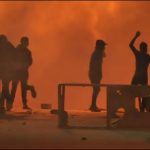
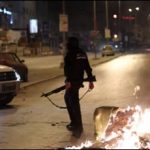
More than 300 protesters have been arrested and the army deployed in several Tunisian cities after violent demonstrations swept the country for a third night despite the threat of a security crackdown. In Thala, near the Algerian border, troops were sent in after protesters burned down the national security building, forcing police to retreat from the town, witnesses said.

Anti-government protests have raged in towns across Tunisia since Monday, including the tourist resort of Sousse. The immediate cause of the unrest is government-imposed price and tax rises, which will raise the cost of basic goods but are said to be essential to cut a ballooning deficit and satisfy international lenders. Longer-term factors include high levels of poverty and youth unemployment, particularly among graduates.

While Tunisia is widely seen as the only democratic success story among Arab spring states, it has had nine governments since the overthrow of the authoritarian leader Zine al-Abidine Ben Ali, none of which have resolved the growing economic problems.

“Some 330 people involved in acts of sabotage and robbery were arrested last night,” said the interior ministry spokesman, Khelifa Chibani, bringing the number of detainees since the protests began to about 600.(theguardian)…[+]

Ritz Paris theft: some jewels found but gang members still on run

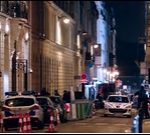
French police have recovered some of the jewels worth an estimated €4m (£3.5m) that were looted from the Ritz hotel in central Paris on Wednesday evening, a police source has told AFP, as officers hunt for two thieves who remain on the run. A gang of five masked men armed with axes and knives smashed the display windows of jewellery shops on the ground floor of the hotel on rue Cambon, near the Place Vendôme, at about 6.30pm (5.30pm GMT). “A part of the loot was recovered scattered about during the arrest of three of the suspected robbers,” the police source said, referring to the men detained immediately after the heist. More jewels and watches were found in a bag dropped by one of the two suspects still at large, added the source, who could not give an estimate for the value of the goods retrieved.(theguardian)…[+]

Tunisia rocked by second night of protests over price rises

Widespread violence flares in Tunis and several other cities during protests against government’s austerity measures. One person has died, 50 policemen have been injured and more than 200 people have been arrested in two nights of widespread and violent protests in Tunisia, driven by anger over steep price rises resulting from austerity measures.

On Tuesday night a Jewish school on a Tunisian island that is home to an ancient Jewish community was attacked. Police and army forces were deployed in several cities during the night, including in Tebourba, 20 miles (30km) west of the capital, Tunis, where hundreds of young people took to the streets after the funeral of a 45-year-old man who died in the unrest on Monday night. Police have insisted they did not kill the man, who they say suffered a chronic respiratory condition. The results of an autopsy have not been made public.(theguardian)…[+]

Catalan parties to seek return of Puigdemont as president

Catalonia’s two largest pro-independence parties have cut a deal that could see Carles Puigdemont re-elected as the region’s president, three months after he fled to Belgium following the Spanish government’s decision to sack him over his role in staging an illegal referendum and unilaterally declaring independence. On Tuesday night Puigdemont’s party, Together for Catalonia, reached an agreement with its former coalition partner, the Catalan Republican Left (ERC), to give pro-independence parties a majority on the parliamentary board when the regional assembly sits next week for first time since the secessionist bloc retained its majority in last December’s elections.

A spokesman for Puigdemont said that under the pact both parties would “move forward with this new parliamentary term with Puigdemont as the president”.(theguardian)…[+]

US to loosen nuclear weapons constraints and develop more ‘usable’ warheads

The Trump administration plans to loosen constraints on the use of nuclear weapons and develop a new low-yield nuclear warhead for US Trident missiles, according to a former official who has seen the most recent draft of a policy review. Jon Wolfsthal, who was special assistant to Barack Obama on arms control and nonproliferation, said the new nuclear posture review prepared by the Pentagon, envisages a modified version of the Trident D5 submarine-launched missiles with only part of its normal warhead, with the intention of deterring Russia from using tactical warheads in a conflict in Eastern Europe. The new nuclear policy is significantly more hawkish that the posture adopted by the Obama administration, which sought to reduce the role of nuclear weapons in US defence.(theguardian)…[+]

Iran protests: deaths in custody spark human rights concerns

Human rights activists in Iran have raised concerns about mass arrests during the country’s largest protests in nearly a decade after at least three demonstrators died in a notorious Tehran jail. Two members of the Iranian parliament close to the reformist camp confirmed on Monday that one detainee, Sina Ghanbari, had died in Evin prison.

Separately, Nasrin Sotoudeh, a prominent human rights lawyer, told the Guardian on the phone from Tehran that at least two other protesters had died in the jail. They have not yet been identified. At least 21 people died after violent clashes between protesters and security guards during more than a week of demonstrations. Most of those killed were protesters and some were security guards, according to officials. More than 1,000 people, including at least 90 students, were arrested. “I spoke to a prisoner in Evin prison and I was told that three detainees had lost their lives,” Sotoudeh said. “When authorities resort to mass arrests, they cannot claim to protect their rights. It is not possible in such a situation for the judicial process to take its due course.”  Sotoudeh was particularly worried about the use of unofficial detention centres. During the protests of 2009 that followed Mahmoud Ahmadinejad’s disputed re-election as president, one such detention centre, Kahrizak, drew nationwide attention after it emerged that a number of protesters had been sexually assaulted, tortured and killed in custody.(theguardian)…[+]

Energy agency rejects Trump plan to prop up coal and nuclear power plants

An independent energy agency on Monday rejected a Trump administration plan to bolster coal-fired and nuclear power plants with subsidies, dealing a blow to the president’s high-profile mission to revive the struggling coal industry.

The decision by the Republican-controlled Federal Energy Regulatory Commission (FERC) was unexpected and comes amid repeated promises by Trump to rejuvenate coal as the nation’s top power source. The industry has been besieged by multiple bankruptcies and a steady loss of market share as natural gas and renewable energy have flourished. Energy secretary Rick Perry last year proposed fresh government support for coal-fired and nuclear power plants in an effort to slow the rate at which these units are being phased out, stating the output is needed to avoid power outages “in times of supply stress such as recent natural disasters”.(theguardian)…[+]

Syrian forces advance on country’s last rebel-held province

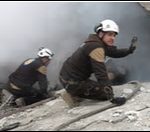
Tens of thousands of people have fled a Syrian government assault on Idlib, the country’s last rebel-held province, prompting warnings of a humanitarian catastrophe.

The regime advance comes amid what a senior aid worker described as a “systematic” attack on hospitals in the region. Eight have been hit between the end of December and the beginning of January. One such attack in the town of Maarat al-Numan on 3 January killed a baby girl who was just two hours old and her father. Two nurses and a doctor were wounded. “The major goals are to deprive people of healthcare, kill opposition medical workers and push people to flee,” said Ahmad al-Dbis, safety and security director for the Union of Medical Care and Relief Organisations (UOSSM), which runs dozens of hospitals in Syria. “The medical situation is a tragedy.”(theguardian)…[+]