english news

Revealed: Dalai Lama’s ‘personal emissary’ suspended over corruption claims

For more than 15 years, Tenzin Dhonden has stood between the Dalai Lama and multitudes of US philanthropists, celebrities, scholars and officials eager for even an instant in the revered Buddhist leader’s presence. In his red and saffron robes and gleaming bald pate, the smiling Tibetan monk, widely known as Lama Tenzin, has introduced himself as the Dalai Lama’s “personal emissary for peace”.

Yet the monk has now been suspended as secretary and trustee of the Dalai Lama Trust, a charitable organization chaired by the Dalai Lama, pending an investigation into allegations from a prominent Seattle-based technology entrepreneur who claims that, between 2005 and 2008, the monk abused his role to extract unjustified payments from him. The Dalai Lama is said to have expressed “deep disappointment and concern” over complaints about his gatekeeper, which include the allegation he demanded payments in return for ensuring the spiritual leader appear at a major event in Washington state.(theguardian)…[+]


Sea levels to rise 1.3m unless coal power ends by 2050, report says

Coastal cities around the world could be devastated by 1.3m of sea level rise this century unless coal-generated electricity is virtually eliminated by 2050, according to a new paper that combines the latest understanding of Antarctica’s contribution to sea level rise and the latest emissions projection scenarios.

It confirms again that significant sea level rise is inevitable and requires rapid adaptation. But, on a more positive note, the work reveals the majority of that rise – driven by newly recognised processes on Antarctica – could be avoided if the world fulfils its commitment made in Paris to keep global warming to “well below 2C”.

In 2016, Robert DeConto from the University of Massachusetts Amherst revealed that Antarctica could contribute to massive sea level rise much earlier than thought, suggesting ice sheet collapse would occur sooner and identifying a new process where huge ice cliffs would disintegrate. But that paper only examined the impact of Antarctica on sea level rise, ignoring other contributions, and didn’t examine the details of what measures society needed to take to avoid those impacts.

The new paper by Alexander Nauels from the University of Melbourne and colleagues uses simplified physical models that allowed them to explore all known contributions to sea level rise, and pair them with the new generation of emissions scenarios which the Intergovernmental Panel on Climate Change (IPCC) will use in the next set of reports.(theguardian)…[+]

Scott Brown: more complaints surface over behaviour of US ambassador to New Zealand

It was a balmy 32 degrees when the US ambassador to New Zealand, Scott Brown, touched down in Apia, the capital of the South Pacific island nation of Samoa.

Brown had flown in with his wife, Gail Huff, in July for a party to celebrate 50 years of the peace corps in the country. It was his inaugural visit to Samoa – of which he is also the official US representative – and one he was looking forward to.

The party was intended as the climax of the ambassador’s trip, a night for celebration. People were in high spirits. They were offered beer, wine, champagne and local hors d’oeuvres, including slices of taro topped with palusami, spring rolls and chicken skewers. But something went wrong that night. As one attendee describes it, something was “off”, and the party is now at the centre of a US state department investigation over the ambassador’s conduct towards two women.On Wednesday, Brown admitted he was being investigated by officials who had flown to Wellington, New Zealand, to interview him.Brown said he wanted to address “innuendo and rumour” and claimed he had been admonished for praising the appearance of several attendees of the party. He also said he had remarked that the waiting staff were good enough to earn hundreds of dollars in the US.(theguardian)…[+]

Kenya elections: police and opposition supporters clash

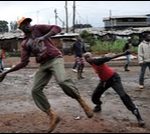
Opposition supporters in Kenya have fought running battles with police as voters headed to the polls in a contentious election rerun that has polarised the country. Raila Odinga, the opposition leader, has called for a boycott and in stark contrast to the first election, which the supreme court annulled last month, many polling stations in opposition strongholds received only a trickle of voters.

In areas loyal to Uhuru Kenyatta, the incumbent who won the original election, voting was brisk, though turnout appeared to be lower than for the previous election. One man was shot dead and three others injured during protests in Odinga’s western stronghold of Kisumu, a nurse at the main government hospital said. In Nairobi’s Kibera slum, tangled wire and charred streets marked the spots where sporadic outbreaks of violence took place overnight. Police fired teargas and live rounds into the air as crowds of youthful opposition supporters threw rocks and tried to storm a polling station at a primary school in the centre of the slum. Two people were injured with suspected bullet wounds.(theguardian)…[+]

Rohingya girls under 10 raped while fleeing Myanmar, charity says

Rohingya children, some of them under 10 years old, are receiving treatment for rape in camps on the Bangladesh border, according to medics who say that young refugees account for half of those sexually assaulted while fleeing violence in Myanmar.

Médecins Sans Frontières says dozens of Rohingya girls have been given medical and psychological support at its Kutupalong health facility’s sexual and reproductive health unit – a specialist clinic for survivors of sexual assault based in the largest refugee camp in Cox’s Bazar. Of those fleeing Rakhine state who come to the clinic for treatment relating to rape, “about 50% are aged 18 or under, including one girl who was nine years old and several others under the age of 10”, an MSF spokesperson said.

The organisation stressed this was just a fraction of those believed to have been sexually assaulted and raped since military operations began on 25 August, as most survivors faced practical and cultural barriers to accessing treatment.

“Women and girls often don’t seek medical care for sexual violence due to the stigma, shame and fear of being blamed for what’s happened to them,” said Aerlyn Pfeil, an MSF midwife focusing on support for survivors of sexual and gender-based violence (SGBV) in Cox’s Bazar. In the last week a nine-year-old girl was among the new arrivals who received medical treatment after being raped, as military violence against Rohingya Muslims in Rakhine continues.(theguardian)…[+]


Senior Amnesty figures among 11 on trial in Turkey on terror charges

Eleven human rights activists including two senior Amnesty International employees have gone on trial in Istanbul on terror charges, in one of the most high-profile tests of Turkish criminal law since a failed coup in 2016. Ten of the activists, including Amnesty’s Turkey director Idil Eser, were arrested while attending a digital security training workshop in July.

They are accused of plotting an uprising and charged with aiding militants as well as the movement led by US-based cleric Fethullah Gülen, blamed for last year’s coup attempt. They face up to 15 years in prison if found guilty. Amnesty’s Turkey chairman, Taner Kılıç, who was imprisoned separately in June, appeared in court via video link from a prison in Izmir, western Turkey. He will also appear at a hearing in Izmir on Thursday on a separate charge of being a member of a Gülen-linked organisation. Kılıç is accused of using Bylock, an encrypted mobile messaging application that the Turkish prosecuting authorities claim was used by Gülen supporters to communicate secretly before the coup attempt.(theguardian)…[+]

Xi Jinping signals intent to remain in power by revealing politburo with no successor

Xi Jinping has kicked off his second term as leader of the world’s second largest economy, vowing to spearhead the “great rejuvenation of the Chinese nation” and signalling his intent to tower over Chinese politics for decades to come. At just before noon on Wednesday, Xi unveiled the new line-up of China’s top ruling council – the Communist party’s politburo standing committee – leading six besuited comrades out into a blaze of camera flashes in the Great Hall of the People.

“Here, on behalf of the newly elected central leadership, I wish to express our heartfelt thanks to all other members of the party for the trust they have placed in us. We will work diligently to meet our duty, fulfil our mission and be worthy of their trust,” Xi said in a 21-minute address that marks the formal start of his second term. Crucially, the all-male group contained no potential successor, since none of its five new members – all aged between 60 and 67 – is young enough to take the reins from Xi after the end of his second term, in 2022, and to then rule for the customary decade.(theguardian)…[+]

‘Antibiotic apocalypse’: doctors sound alarm over drug resistance

Scientists attending a recent meeting of the American Society for Microbiology reported they had uncovered a highly disturbing trend. They revealed that bacteria containing a gene known as mcr-1 – which confers resistance to the antibiotic colistin – had spread round the world at an alarming rate since its original discovery 18 months earlier. In one area of China, it was found that 25% of hospital patients now carried the gene. Colistin is known as the “antibiotic of last resort”. In many parts of the world doctors have turned to its use because patients were no longer responding to any other antimicrobial agent. Now resistance to its use is spreading across the globe.

In the words of England’s chief medical officer, Sally Davies: “The world is facing an antibiotic apocalypse.” Unless action is taken to halt the practices that have allowed antimicrobial resistance to spread and ways are found to develop new types of antibiotics, we could return to the days when routine operations, simple wounds or straightforward infections could pose real threats to life, she warns.

That terrifying prospect will be the focus of a major international conference to be held in Berlin this week. Organised by the UK government, the Wellcome Trust, the UN and several other national governments, the meeting will be attended by scientists, health officers, pharmaceutical chiefs and politicians. Its task is to try to accelerate measures to halt the spread of drug resistance, which now threatens to remove many of the major weapons currently deployed by doctors in their war against disease.(theguardian)…[+]

LGBT people in Egypt targeted in wave of arrests and violence

Members of the lesbian, gay, bisexual and transgender (LGBT) community in Egypt are living in fear following a wave of arrests and violence. Rights groups say dozens of people have been detained in the crackdown, which began after rainbow flags were waved at a rock concert on the outskirts of Cairo last month, prompting a furious reaction in the Egyptian media.

The current spike in arrests is part of an ongoing climate of repression against the LGBT community in Egypt. LGBT people have long grappled with government repression, including online surveillance, entrapment and abuse in detention. Homosexuality is not illegal under Egyptian law, but homosexual acts in public are illegal, and members of the LGBT community are often arrested on euphemistic charges, such as “debauchery”.

“It’s truly messed up that the government leaves all the thuggery in the streets, poverty everywhere – and is concerned with what people are doing in their bedrooms,” said Abdel-Rahman, whose name has been changed for his safety. He is now avoiding meeting potential partners in public for fear of being tracked by authorities.(theguardian)…[+]

Trump says ‘only one thing will work’ with nuclear-armed North Korea

Donald Trump on Saturday said “only one thing will work” in dealing with North Korea, after previous administrations had talked to Pyongyang without results. “Presidents and their administrations have been talking to North Korea for 25 years, agreements made and massive amounts of money paid,” Trump wrote on Twitter. “Hasn’t worked, agreements violated before the ink was dry, making fools of US negotiators. Sorry, but only one thing will work!“

Trump did not make clear to what he was referring. Amid rising tension and exchanges of insults with the nuclear-armed regime of Kim Jong-un, Trump has previously said the US will destroy North Korea if necessary to protect itself and its allies. Later on Saturday, Trump spoke to reporters at the White House before he left for a fundraiser in South Carolina. Asked to clarify his cryptic “calm before the storm” remark earlier this week, which was made to reporters ushered into a dinner with military leaders, he said: “Nothing to clarify.”

Trump also repeated that he and the secretary of state, Rex Tillerson, had “a very good relationship”. Tillerson has been the target of criticism from the president about his attempts to talk to North Korea and to engage China to rein in Pyongyang.(theguardian)…[+]