english news

People ‘burned to death in homes’ by South Sudan’s government militias

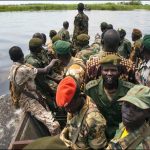
The government of South Sudan and its militias are behaving with vicious brutality in the country, with reports of men being locked in huts and burned to death, and of machete attacks being carried out in remote villages.

The atrocities are just one of the causes of the major refugee crisis in the region, with almost a million people fleeing to Uganda. Out of a population of some 12.5 million, more than 1.7 million are enduring severe hunger, classified as just one step below famine, and the number at risk of starvation is 6 million and growing. On top of that, a fast-spreading cholera outbreak threatens to kill thousands. The human rights group Amnesty International, which has been gathering together reports from the conflict, said forces – those loyal to the government and also some to the opposition – had also cut food supplies to parts of the country.

Women and girls are increasingly being abducted and raped in the region of Equatoria, a new frontline in the conflict, which is now a region of “treacherous killing fields”, according to Amnesty. “The escalation of fighting in the Equatoria region has led to increased brutality against civilians. Men, women and children have been shot, hacked to death with machetes and burned alive in their homes. Women and girls have been gang-raped and abducted,” said Donatella Rovera, Amnesty International’s senior crisis response adviser.(theguardian)…[+]
Call for stiffer fines for ‘gawping’ drivers after Bavarian bus crash

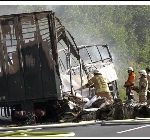
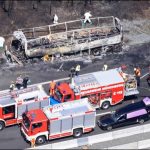
German politicians have called for an overhaul of transport laws after claims that “rubbernecking” drivers may have cost lives by blocking emergency vehicles’ access to a burning bus in Bavaria on Monday. Eighteen people are now known to have been killed after the bus, which was carrying elderly tourists to Italy, hit the back of a lorry on the A9 motorway. The bus immediately caught fire, killing more than a third of those on board.

Drivers have been accused of failing to follow motorway protocol by clearing the emergency lane. “Their behaviour is totally irresponsible and shameful,” said Joachim Herrmann, Bavaria’s interior minister responsible for transport, after visiting the accident site. He said that emergency services had reached the crash site 10 minutes after being called out, but that they might have arrived sooner, had it not been for drivers who failed to open a corridor to allow fire engines and ambulances through. He claimed the space made was not wide enough for larger vehicles, which had “lost valuable time” as a result. By the time firefighters reached the scene, the heat of the fire was so intense they were unable to approach the vehicle. Thirty passengers managed to escape. Of the survivors, many are still being treated in hospital and two have life-threatening injuries.(theguardian)…[+]

Protesters plan to ‘kettle’ leaders at G20 summit in Hamburg

Protesters plan to take advantage of the decision to hold this week’s G20 summit in a crowded inner-city area of Hamburg and copy police crowd control tactics to “kettle Trump, Putin and Erdoğan”.

Authorities in Germany’s second-largest city are preparing for the arrival of an unprecedented line-up of controversial world leaders, as well as protest groups eager to voice dissent on 7 and 8 July. Donald Trump and Vladimir Putin will meet at the summit, and Germany will try to push climate change and free trade to the top of the agenda. The chancellor, Angela Merkel, has argued that her birthplace, a wealthy port city and a “beacon of free trade”, was “almost predestined” to host the gathering of the world’s leading industrialised and developing economies.

But the decision to hold it at a congress centre in a densely populated part of the inner city, bordering a district with a long-running history of anti-establishment protests and annual May Day riots, has put police services on high alert. On Sunday night, the first of a series of protest marches culminated in clashes with police over a disputed campsite in one of the city’s park areas. Several people were reportedly injured and one person was arrested.(theguardian)…[+]

Grenades and plastic explosives stolen from Portuguese arsenal

Investigators in Portugal are looking into how a gang of thieves managed to break into the national arsenal and make off with an enormous haul of weapons including anti-tank grenades, plastic explosives and more than 1,400 rounds of ammunition. The theft from the Tancos military complex, 60 miles (100km) north-east of Lisbon, was discovered last Wednesday. Reports suggest the complex’s CCTV system has been broken for the past two years.

Portugal’s defence minister, José Azeredo Lopes, said the thieves cut through a perimeter fence, and he described the operation as “very professional” and a serious security breach. Lopes said Portugal’s partners in Nato and the EU had been informed of the incident. On Monday the Spanish news site El Español published an inventory of the missing items that it had obtained from Spanish counter-terrorism sources. Among the items were 1,450 9mm cartridges, 18 teargas grenades, 150 hand grenades, 44 anti-tank grenades and 264 units of plastic explosives.(theguardian)…[+]

Eighteen feared dead after coach bursts into flames in Bavaria crash

German police believe 18 people have died after a coach burst into flames following a collision with a lorry on a motorway in Bavaria on Monday morning. Police said a group of 46 pensioners and two drivers were on the coach when it caught fire after driving into the back of a slow-moving articulated lorry on the A9, which connects Berlin and Munich via Leipzig and Nuremberg. “Thirty passengers were taken to hospitals, some with serious injuries. The others are believed to have died in the burning tour bus,” the police said. Local media reported that the lorry, which was loaded with pillows and mattresses, caught fire at the moment of impact.The A9 was closed in both directions as several fire and ambulance vehicles, including helicopters, rushed to the scene, close to the town of Stammbach.According to Bild newspaper, the coach had been travelling from the Lausitz region towards Lake Garda, Italy’s largest lake and a popular tourist destination.(Theguardian)…[+]

Qatar facing further sanctions as ultimatum deadline looms

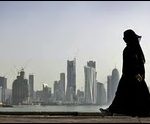
Qatar could face further sanctions by Arab states as a deadline to accept a series of demands from its Gulf neighbours, including closing down the television network al-Jazeera, passes on Sunday night. Rex Tillerson, the US secretary of state, was working the phones to see whether a compromise could be reached but Qatari leaders have effectively rejected the 13 demands tabled 10 days ago by Saudi Arabia, the United Arab Emirates, Egypt and Bahrain.

Qatar’s foreign minister, Sheikh Mohammed bin Abdulrahman Al-Thani, said on Saturday that the demands to shut down al-Jazeera, close a Turkish military base and cut relations with Iran had been framed to be rejected. The demands were made by the Saudi-led allies over allegations of Qatari support for terrorism, which it denies. It has called the demands an attack on its sovereignty. The four anti-Qatar states have only hinted at how they will respond if their ultimatum is spurned and not detailed any immediate penalties.(theguardian)…[+]

May’s Brexit plan will hit rights of Britons abroad, campaigners tell EU

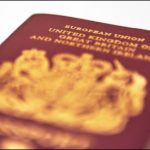
Theresa May’s proposal to protect the rights of EU citizens after Brexit is so poor, it will badly damage the rights of Britons living in Europe, campaign groups have told the European commission. In an official response to the EU Brexit negotiating team, British in Europe and the3million have said that if May’s proposal is adopted it would represent a “severe reduction of the current rights” enjoyed by Britons in Europe.

Last week they expressed fears that Britons would be the “sacrifical lambs” in the Conservatives’ mission to reduce immigration. The groups say May’s offer looks to curtail citizens’ rights to pensions and to move around the EU to work. They say that, if adopted, the UK proposal would also prevent them from returning to Britain for work or retirement with their EU spouses or to have an elderly parent move in with them in Europe.(theguardian)…[+]

Zika Cases on the Decline, But the War on Mosquitoes is Far from Over

Port of Spain, Trinidad and Tobago.  1st July, 2017. “Even though the number of cases of Zika have significantly declined from the outbreak of 2016, there is still need for continued vigilance and action on mosquito borne diseases, which pose a health security threat, a tourism threat, and an economic threat,” stated Dr C. James Hospedales, Executive Director of the Caribbean Public Health Agency (CARPHA).


These statistics were revealed as part of an information package disseminated to Member States in observation of Caribbean Public Health day 2017.


The package profiles Zika since its arrival in the CARPHA Member States and addresses the epidemic and its impact on health, the economy and the tourism sector.  It also highlights actions of member states and partners, new technologies and approaches, and what CARPHA is doing to help its member states.


This newest mosquito borne disease to the Region, came on the heels of chikungunya which affected the health and economic structure of most countries and territories.  In late 2015, the Caribbean confirmed its first case of the Zika virus, followed by a dramatic increase in 2016.  The number of laboratory requests and confirmed tests peaked in August, then began a steady decline to December.  The Zika epidemic has shown signs of a significant slow-down, and the risk to residents and visitors is deemed much lower. However, the region continues to struggle and fight against the Aedes aegypti mosquito responsible for its transmission.


Zika has been associated with an increase in Guillian Barre syndromes (GBS) in five CARPHA member states (CMS).  A Zika-associated case of microcephaly has also been reported in one country. No reports of sexually transmitted Zika cases in CMS have been documented. These associated complications can have a marked impact on the people affected and their communities.

Dr Hospedales said “The Region has seen dengue, Chikungunya, and now Zika which is transmitted by the same mosquito, and the key to tackling them is prevention and control.  We must continue to literally wage war on them. But we need to be smarter. We need new approaches and technologies and partners against this threat, which is present throughout most of the tropical world.” CARPHA revealed that its reference laboratory received thousands of requests for testing, and as of April 2017, 24 Members States reported locally transmitted cases of the virus.(CARPHA)…[+]


Jacob Zuma under pressure to quit over alleged links to tycoons

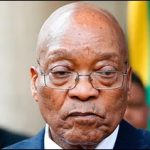
Jacob Zuma, South Africa’s embattled president, faces renewed pressure to step down this weekend after a series of media reports detailed links between elected officials and a family of tycoons accused of holding undue sway over his administration.

More than 100,000 documents and emails leaked to reporters in recent weeks appear to detail improper dealings in lucrative government contracts made with the Gupta family – secretive and immensely wealthy businessmen of Indian origin who have lived in South Africa for decades. Authorities have launched an investigation into several allies of Zuma who have been linked to corruption at three state-owned companies. One of the allegations involves suspected kickbacks worth $411m. The Gupta family and Zuma have consistently denied any wrongdoing.(theguardain)…[+]

German parliament votes to legalise same-sex marriage

Germany’s parliament has voted in favour of legalising same-sex marriage, joining many other western democracies in granting gay and lesbian couples full rights, including adoption. Norbert Lammert, president of the parliament, said 393 lawmakers voted in favour, 226 voted against and four abstained.

The chancellor, Angela Merkel, said she voted against the move because she believed marriage was for a man and a woman. She said the decision for her was a personal one, but she hoped the result would lead to greater social cohesion. “It was a long, intensive, and for many also emotional discussion, that goes for me personally too, and I’m hopeful not only that there will be respect for either side’s opinions, but that it will also bring about more peace and cohesion in society,” she said.

The election-year bill was pushed by Merkel’s leftist rivals, who pounced on a U-turn she made on Monday in which she softened her stance against gay marriage, a manoeuvre that left many conservative politicians fuming.(theguardian)…[+]