english news

Incidences of Foodborne Ailments on the Rise in the Caribbean Region

Port of Spain-

Every year, thousands of people in the Caribbean experience food-borne illnesses, after exposure to contaminated food or drink. Persons affected usually experience severe diarrhoea, vomiting, stomach pain, sometimes accompanied by fever, headaches and other symptoms. Recent increases in reported incidents of foodborne diseases (FBDs), have now made this common health issue a regional priority.


Dr Bernadette Theodore-Gandi, Pan American Health Organization/World Health Organization (PAHO/WHO) Representative for Trinidad and Tobago, in her opening address to participants at the four-day Sub Regional Workshop on Strengthening Food-borne Disease Surveillance in the Caribbean, indicated that food safety is a global priority  and that PAHO/WHO recommends the farm to table approach, linking the processes from food production, distribution and consumption  to reduce food-borne illnesses in the Region.


Dr Karen Polson-Edwards, Acting Director of the Surveillance, Disease Prevention and Control Division at the Caribbean Public Health Agency (CARPHA), informed participants that statistics show that food-borne illness is one of the most common and increasing public health issues. However, ensuring the safe supply of food in the Caribbean was a complex challenge given the vast differences in countries and the Region’s heavy reliance on tourism and food importation. She also noted that the prevention of food-borne diseases is one of the many priorities of CARPHA, as the Caribbean relies heavily on income gained from the tourism sector which accounts for 25-65% of the gross domestic products in most countries.

Dr Lisa Indar, Head of the Tourism and Health programme and Foodborne Diseases Lead at CARPHA, emphasised that unsafe food can lead to outbreaks of food-borne illness that can have serious health, economic, reputational implications for the region’s tourism dependant economies and adversely affect the influx of visitors to the Region. She highlighted that since 2003, CARPHA and PAHO have been working together to reduce foodborne diseases, and the workshop is part of continued efforts to ensure that the region is equipped to adequately prevent and combat FBDs and boost tourism sustainability. (CARPHA)…[+]


Brexit: UK backing away from threat to leave with no deal, say EU diplomats

European diplomats based in the UK say the British government is stepping back from its threat to leave the EU without a trade deal if negotiations break down.In private, say diplomats, UK officials recognise the “havoc” that this would cause, and have come to regret the threat to turn the UK into a deregulated offshore tax haven, implicit in Theresa May’s Lancaster House speech in January, when she warned that “no deal for Britain is better than a bad deal”.They claim the conciliatory signals from UK government officials are an attempt to lower the temperature asthe prime minister prepares to send the UK’s article 50 letter on Wednesday, triggering the start of two years of intensive Brexit negotiations.(guardian)…[+]

Marine A, who killed unarmed Taliban fighter, set to be freed in two weeks

The former Royal Marine Alexander Blackman is expected to be freed from prison in around two weeks after senior judges sentenced him to seven years for the manslaughter of an injured Taliban fighter in Afghanistan.

After a long campaign that led to Blackman’s murder conviction being quashed and replaced with manslaughter by reason of diminished responsibility, a new sentence was set by the court martial appeal court on Tuesday. It means the 42-year-old no longer faces life in jail but has been given a determinate sentence, and because of time already served should be out next month, three and a half years after he was first sent to a civilian prison.

The sentence was greeted with relief and joy by supporters of Blackman, who was initially known by his codename Marine A, but any hopes of his being allowed back into the marines were dashed.  Though the five judges said his outstanding service before the killing and his poor mental state at the time meant that dismissal with disgrace was not appropriate, they maintained that the severity of his crime meant he should remain dismissed.(guardian)…[+]

Incidences of Foodborne Ailments on the Rise in the Caribbean Region

Port of Spain-

Every year, thousands of people in the Caribbean experience food-borne illnesses, after exposure to contaminated food or drink. Persons affected usually experience severe diarrhoea, vomiting, stomach pain, sometimes accompanied by fever, headaches and other symptoms. Recent increases in reported incidents of foodborne diseases (FBDs), have now made this common health issue a regional priority.


Dr Bernadette Theodore-Gandi, Pan American Health Organization/World Health Organization (PAHO/WHO) Representative for Trinidad and Tobago, in her opening address to participants at the four-day Sub Regional Workshop on Strengthening Food-borne Disease Surveillance in the Caribbean, indicated that food safety is a global priority  and that PAHO/WHO recommends the farm to table approach, linking the processes from food production, distribution and consumption  to reduce food-borne illnesses in the Region.


Dr Karen Polson-Edwards, Acting Director of the Surveillance, Disease Prevention and Control Division at the Caribbean Public Health Agency (CARPHA), informed participants that statistics show that food-borne illness is one of the most common and increasing public health issues. However, ensuring the safe supply of food in the Caribbean was a complex challenge given the vast differences in countries and the Region’s heavy reliance on tourism and food importation. She also noted that the prevention of food-borne diseases is one of the many priorities of CARPHA, as the Caribbean relies heavily on income gained from the tourism sector which accounts for 25-65% of the gross domestic products in most countries.


Dr Lisa Indar, Head of the Tourism and Health programme and Foodborne Diseases Lead at CARPHA, emphasised that unsafe food can lead to outbreaks of food-borne illness that can have serious health, economic, reputational implications for the region’s tourism dependant economies and adversely affect the influx of visitors to the Region. She highlighted that since 2003, CARPHA and PAHO have been working together to reduce foodborne diseases, and the workshop is part of continued efforts to ensure that the region is equipped to adequately prevent and combat FBDs and boost tourism sustainability.

Mr Neil Rampersad, Chief Public Health Inspector (Ag) for Trinidad and Tobago, in his feature address remarked that foodborne illnesses can severely eat into a nation’s health budget and adversely affects both young and mature.  Additionally, the costliness of food-borne illnesses not only includes costs for medication and treatment, but also involves downtime in productivity. He also said that the workshop was a welcomed strategy to develop national and regional action plans to combat FBD outbreaks. Participants at the workshop will use the WHO Food-borne Disease Surveillance Manual to individually assess their country’s current ability to combat and prevent FBDs. They will also create action plans to identify areas of priority for national surveillance and the resources required to enhance food safety.(CARPHA)…[+]

Spanish court to investigate Syrian ‘state terrorism’ by Assad regime

A Spanish court is to investigate allegations that nine members of the Syrian regime committed “state terrorism” by kidnapping, torturing and murdering a truck driver who disappeared in Damascus four years ago. The landmark case – the first criminal complaint accepted against President Bashar al-Assad’s security forces by a European court – has been brought on behalf of the victim’s sister, a Spanish citizen who lives in Madrid. Lawyers acting for the woman, known as Mrs AH, argue that she is the victim of her brother’s forced disappearance, torture and execution – and that the Spanish courts have the jurisdiction to investigate and prosecute the case.

On Monday, Judge Eloy Velasco of Spain’s national court accepted their arguments and ordered an investigation to be opened.

Details of the driver’s fate emerged after a Syrian forensic officer defected in September 2013, fleeing the country with more than 50,000 photographs. The pictures taken by Caesar – the pseudonym by which he is known – contain images of the bodies of more than 6,000 victims.(the guardian)…[+]

Six UN aid workers killed in ambush in South Sudan

Six UN aid workers have been killed in South Sudan in the worst single attack on humanitarian staff in the country’s three-year civil war. The six workers, from a Unicef partner, Grassroots Empowerment and Development Organisation (Gredo), which works to support children released from armed groups, were in a vehicle marked as belonging to an NGO when they were attacked on Saturday.They were killed as they drove from the capital, Juba, to the town of Pibor, according to the UN. The territory, which is remote and under government control, is beset with militia and armed groups. The UN called the attack a “heinous murder of six courageous humanitarians”.

The South Sudanese government said it was too early to say who was to blame for the ambush. Akol Paul Kordit, the deputy minister of information, told Reuters in Juba: “It will be counterproductive at this stage for anybody to rush for judgment without first allowing the truth to be established.”(the guardian)…[+]

CARPHA Conference to Examine Climate Change and the Risks to Human Health

Guyana- The Caribbean region made up of small island nations, is one of the most vulnerable to the negative impacts of climate change. In recent years, the Region has experienced more frequent and intense storms and hurricanes, increases in mosquito-borne diseases, rises in sea level, prolonged periods of drought which pose a significant threat to human health.

Implications of rising sea levels, impact of climate change on food security and health, as well as tobacco use among Caribbean youth, transgendered health, obesity, cardiovascular diseases, and Zika are among the public health issues that will be addressed at the Caribbean Public Health Agency (CARPHA) Annual Health Research Conference this year.

The Conference, now in its 62nd year, will be held at the Guyana Marriott Hotel. At a media conference held recently at the Cara Lodge Hotels, Executive Director, CARPHA, Dr C. James Hospedales, said under the theme Climate Change, the Environment and Human Health, the conference will feature an Expert Panel on Climate Change and Health. This meeting is expected to deliver a roadmap for how the Region should tackle issues related to climate and health. Dr. Hospedales said the Conference is the major forum in the Region where health researchers share and promote ways in which evidence can be used to improve people’s health and prevent death and suffering. He added that it also provides a training ground for young researchers. (CARPHA)…[+]

Louisiana officer convicted of manslaughter in 6-year-old boy’s death

A Louisiana law enforcement officer was convicted Friday on a lesser charge of manslaughter in a shooting that killed a 6-year-old autistic boy, an encounter captured on tape by another officer’s body camera.

Jurors found Derrick Stafford guilty of manslaughter and attempted manslaughter charges, multiple news outlets reported. He had faced charges of second-degree murder and attempted second-degree murder in the case.

Stafford, 33, and another deputy city marshal opened fire on a car killing Jeremy Mardis and critically wounding his father after a 2-mile (3-kilometer) car chase in Marksville on the night of 3 November, 2015.

Video from a police officer’s body camera shows the father, Christopher Few, had his hands raised inside his vehicle while the two deputies collectively fired 18 shots. At least four of those bullets hit Jeremy, who died within minutes.

Stafford testified that he shot at the car because he feared Few was going to back up and hit the other deputy, Norris Greenhouse Jr. “I felt I had no choice but to save Norris. That is the only reason I fired my weapon,” Stafford said.

Greenhouse, 25, faces a separate trial on murder charges later this year.(guardian)…[+]

Police investigate death of teenage boxer after bout

Police have launched an investigation after a 17-year-old amateur boxer died shortly after collapsing in the ring.

Derbyshire police said officers were called to the Post Mill Centre, South Normanton, at 10.17pm on Friday. The youth, who is from Ripley, near Derby, was given medical treatment at the scene but was pronounced dead on arrival at Kings Mill hospital in Mansfield, Nottinghamshire.

Formal identification has yet to take place and a postmortem examination is due to be carried out to establish the cause of death.

The centre’s website said an “amateur open boxing show” was being held at the venue from 7-11pm on Friday, organised by the South Normanton School of Boxing.

A police spokesman said there did not appear to be any suspicious circumstances surrounding the death, but appealed for anyone with footage of the bout or information that might help to contact the investigations team.

The Board of England Boxing confirmed that a boxer had died after a bout at an event it had sanctioned in Derby.(guardian)…[+]

Mosul’s children were shouting beneath the rubble. Nobody came

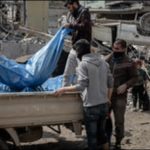
By the time rescuers finally arrived no one was left alive. For almost a week desperate neighbours had scraped through the rubble, searching for as many as 150 people who lay buried after three homes in a west Mosul suburb were destroyed by coalition airstrikes. The full picture of the carnage continued to emerge on Friday, when at least 20 bodies were recovered. Dozens more are thought to remain buried in what could turn out to be the single most deadly incident for civilians in the war against Islamic State (Isis).

Rescuers at the scene in the suburb of Mosul Jadida said they had driven the 250 miles from Baghdad but had not been able to enter the area until Wednesday, five days after airstrikes hit the houses where local residents had been sheltering from fierce fighting between Iraqi forces and Isis.

Neighbours said at least 80 bodies had been recovered from one house alone, where people had been encouraged by local elders to take shelter. Rescuers were continuing to dig through the ruins, and the remains of two other houses nearby, which had also been pulverised in attacks that were described as “relentless and horrifying”.(guardian)…[+]