Paul Rusesabagina, a former hotel manager portrayed as a hero in the Hollywood film Hotel Rwanda, is to be released from prison in Kigali. Two years ago, he was sentenced to 25 years for terrorism by a Rwandan court in what supporters called a sham trial. A government spokesperson said Mr Rusesabagina’s sentence had been “commuted by presidential order”. Mr Rusesabagina, 68, is credited with saving some 1,200 people during the 1994 genocide. In a statement his family told the BBC: “We are pleased to hear the news about Paul’s release. The family is hopeful to reunite with him soon.” It has taken years of diplomatic pressure and talks brokered by Qatar for Mr Rusesabagina to be released. Much of that pressure came from the United States, where he had lived since 2009. The Biden administration has said he was “wrongfully detained”. His family say the Rwandan government lured him from Texas, where he had permanent residency, back to Rwanda in 2020. Mr Rusesabagina left Rwanda in 1996. His story remained largely unknown for a decade, while he worked as a taxi driver in the Belgian capital, Brussels. It was featured in a section of journalist Philip Gourevitch’s 1998 book about the genocide, but it was the 2004 Hollywood movie, where he was played by Don Cheadle, that brought him global attention.(BBC)…[+]
english news
How a Russian child’s drawing sparked a police investigation
In the centre of the Russian town of Yefremov is a wall covered in pictures of war. Giant photographs of masked Russian soldiers with guns and supersized letters Z and V – symbols of the country’s so-called special military operation in Ukraine.
There’s a poem, too:
Good should have fists.
Good needs an iron hand
To tear the skin from those
Who threaten it.
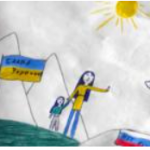
This is the official, patriotic picture of Russia’s invasion of Ukraine. But in this town, 320km (200 miles) south of Moscow, you’ll find another image of the Ukraine war. A very different one. Town councillor Olga Podolskaya shows me a photo on her mobile phone. It’s of a child’s drawing. To the left is a Ukrainian flag with the words “Glory to Ukraine”, on the right, the Russian tricolour and the inscription “No to war!”. As missiles fly in from the direction of Russia, a mother and her child stand defiantly in their path. The picture was drawn in April 2022 by then 12-year-old Masha Moskaleva. Her father Alexei, a single parent, had contacted the town councillor for advice. He told her that after seeing Masha’s drawing, her school had called the police.
“The police started investigating Alexei’s social media,” Olga tells me. “And they told him that he was bringing up his daughter in a bad way.” Charges followed. For an anti-war post on social media, Alexei was fined 32,000 roubles (around $415 or £338 at the time) for discrediting the Russian armed forces. A few weeks ago, a criminal case was opened against him. Again, anti-war posts formed the basis for discreditation charges. This time Alexei faces a possible prison sentence. Alexei is currently under house arrest in Yefremov. His daughter Masha has – for now – been sent to a children’s home. Alexei has not even been allowed to speak to her on the phone. “No-one has seen Masha since 1 March,” Olga Podolskaya tells me, “despite our attempts to get access to the children’s home and to find out how she is.(BBC)…[+]
Ebola-like Marburg virus kills five people in Tanzania
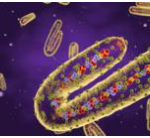
Marburg virus has killed five people in Tanzania’s north-western Kagera region, the health ministry has said. High fever is a common symptom of the deadly Ebola-like virus, often followed by bleeding and organ failure. Tanzania’s health minister Ummy Mwalimu said the disease had been contained and she was confident it would not spread further. Three people are being treated in hospital and authorities are tracing 161 contacts, Ms Mwalimu added. Tanzania’s strategy to control the spread was praised by the World Health Organization (WHO). WHO’s regional director for Africa, Dr Matshidiso Moeti, said: “The efforts by Tanzania’s health authorities to establish the cause of the disease is a clear indication of the determination to effectively respond to the outbreak.” Dr Moeti said WHO is working with Tanzania’s government to “rapidly scale up control measures to halt the spread of the virus”. The Marburg virus is a cousin of the equally deadly Ebola virus – part of the filovirus family – and it kills on average half of those infected, the WHO says. It is a severe, often fatal illness with symptoms including headache, fever, muscle pains, vomiting blood and bleeding. No vaccines or anti-viral treatments have been approved to treat the virus, the WHO has said, but it adds that rehydration with oral or intravenous fluids has improved survival.(BBC)…[+]
French reforms: Macron refuses to give way as pension protests escalate

French President Emmanuel Macron has given a defiant defence of his decision to force through a rise in the pension age, in the face of protests across France and two no-confidence votes. “This reform isn’t a luxury, it’s not a pleasure, it’s a necessity,” he said. Protesters have been emboldened by the government’s use of constitutional power to ram through reforms without a vote in the National Assembly. A ninth round of strikes and national protests will take place on Thursday. There have been six nights of demonstrations involving hundreds of arrests in a number of cities. Bins that have been left overflowing by refuse workers have been set alight and 13% of petrol stations are running short of fuel because of blockades at oil refineries; almost half the pumps in the Bouches-du-Rhône area of the south have run dry. The protests have also cast a cloud over King Charles’s imminent visit to France. Green MP Sandrine Rousseau called for the trip to be cancelled: “Is the priority really to receive Charles III at Versailles? Something is taking place within French society… the priority is to go and talk to society which is rising up.”(BBC)…[+]
Andrew Tate: Brothers’ custody extended by another month
Controversial influencer Andrew Tate and his brother Tristan will remain in custody in Romania for a fourth consecutive month, a court has ruled. The brothers have been detained since December and are being investigated on allegations of rape, people trafficking and forming an organised crime group. Both have denied wrongdoing. Mr Tate’s lawyers say he will be held until the end of April. Under Romanian law, the men can be held for up to six months in detention. The brothers’ lawyers told a court in Bucharest prosecutors had brought no new evidence to Wednesday’s hearing. They suggested their clients’ notoriety was contributing to the decision to keep them in custody. Lawyers have long argued keeping the Tates in preventative custody is unnecessarily harsh, when other judicial options – such as house arrest – are available. But, judges have repeatedly disagreed and ruled four times this year to keep the men in preventative detention while investigators compile evidence against them.(BBC)…[+]
Saad Ibrahim Almadi: Saudi Arabia releases US man jailed over tweets
Saudi Arabia has released a US citizen from prison more than a year on from his conviction over tweets critical of the government, his family has said. Saad Ibrahim Almadi, 72, who also has Saudi citizenship, was arrested in November 2021 when he arrived in Riyadh to visit his family. He was sentenced in October to 16 years in prison. An appeals court increased the term to 19 years last month. Neither the US nor Saudi authorities have commented on Mr Almadi’s release. His son, Ibrahim, confirmed his father was at a family residence in Riyadh but said it was not clear when he might return to his home in Florida. “All charges have been dropped but we have to fight the travel ban now,” Ibrahim told Reuters news agency. Mr Almadi was found guilty by a court of trying to destabilise the kingdom and of supporting and funding terrorism. He was also issued with a 16-year travel ban.(BBC)…[+]
US police forces on alert ahead of possible Donald Trump arrest
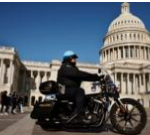
Police in major US cities are preparing for potential unrest in case ex-President Donald Trump is arrested this week as part of a hush-money inquiry. Authorities in New York, Washington DC and Los Angeles are ramping up their law enforcement presence. A Manhattan prosecutor may charge Mr Trump over how he declared a payment to a porn star to keep quiet about an alleged affair. It would be the first criminal case brought against a former US president. Steel barricades were being erected on Monday outside the Manhattan Criminal Court, where Mr Trump could be charged, fingerprinted and photographed if charges are filed this week, as US media widely anticipate. Increased police presence has also been seen outside Trump Tower in the city. Every member of the New York Police Department (NYPD), including plainclothes detectives, has been ordered to wear their full uniform on Tuesday and is being placed on standby to mobilise, a police source told CBS, the BBC’s US partner.(BBC)…[+]
Journalist opens USB letter bomb in newsroom
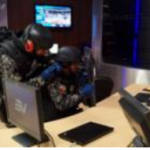
Journalists across Ecuador have been targeted by explosive devices sent through the post. One presenter, Lenin Artieda, was injured when he opened the envelope in the middle of the newsroom. He said the explosive device looked like a USB drive. He plugged it into his computer and it detonated. The Ecuadorean attorney-general’s department confirmed it had opened a terrorism investigation into the letters on Monday. It did not name the specific news outlets targeted. However, at least five different organisations across Ecuador were sent the letters. The government has condemned the attacks, describing freedom of expression as “a right that must be respected”. “Any attempt to intimidate journalism and freedom of expression is a loathsome action that should be punished with all the rigour of justice,” it said in a statement. The interior minister, Juan Zapata, said the devices were all sent from the same town. Three were sent to media outlets in Guayaquil and two to the capital, Quito. While Mr Artieda was injured by the device, others sent through the post failed to explode or were never opened. Police carried out a controlled detonation of one of the devices sent to TC Television, prosecutors confirmed. Ecuador’s head of forensic science said they contained “military-type” explosives.(BBC)…[+]
Gulf Clan: Colombia suspends ceasefire with drug cartel
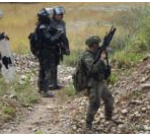
Colombian President Gustavo Petro has suspended a ceasefire with the country’s main drug trafficking cartel, the Gulf Clan. He accused it of “sowing anxiety and terror” and ordered the security forces to reactivate their military operations against the criminal gang. The ceasefire had been agreed in December as part of the president’s plan for “total peace” in Colombia. Its suspension is a major blow to Mr Petro’s attempt to end armed conflict. His policy is radically different from that from his predecessor in office, Iván Duque, who tried to secure peace by stepping up military operations against Colombia’s illegal armed groups. Mr Petro is instead trying to negotiate an end of hostilities with dozens of criminal organisations. On 31 December 2022, the government had announced that it had reached a bilateral ceasefire with the Gulf Clan as well as rebels of the National Liberation Army (ELN) and dissidents from the Revolutionary Armed Forces of Colombia (Farc) among others. But this past week, President Petro has accused the Gulf Clan of breaking the ceasefire, blaming it for an attack on an aqueduct and saying it had incited protests from informal gold miners.(BBC)…[+]
Somalia drought may have killed 43,000 last year – UN
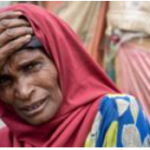
Around 43,000 people may have died in Somalia last year after several failed rainy seasons, a new report by the Somali government and UN suggests. It is the first official death toll from the drought in the Horn of Africa. Half of the fatalities are thought to be in children under five. The crisis is “far from over”, with 18,000-34,000 more deaths expected in the first six months of this year. In 2011, a famine in Somalia killed over a quarter of a million people. “We are racing against time to prevent deaths and save lives that are avoidable,” said World Health Organisation (WHO) representative Dr Mamunur Rahman Malik. He added that the “cost of our inaction” would mean children, women and vulnerable people would die as “we hopelessly, helplessly witness the tragedy unfold”. The UN says it needs $2.6bn (£2.1bn) for its Somalia drought response plan this year. So far, under 15% of that has been funded. Millions of farm animals have died in the crisis, which has been worsened by climate change, political instability and the global rise in food prices. One problem has been getting aid into territory controlled by al-Shabab, which is affiliated to al-Qaeda and considered a terrorist group by both the US and UK. Al-Shabab regularly launches brutal attacks in Somalia and poses a massive obstacle to humanitarian activity. But strict US government rules blocking any assistance from benefitting designated terrorist groups have also complicated efforts to reach many desperate communities. Some humanitarian officials believe the international community has sidelined the crisis due to the war in Ukraine.(BBC)…[+]