english news

Kenya atheists seek ban on school prayer days

The association of atheists in Kenya has written to the education ministry seeking a ban on prayer days in public schools ahead of national examinations. The group says the prayer days are in contravention to students’ rights.  Public schools have a tradition of organising for prayer days before students sit for national examinations.

Schools have this week called parents to join in the tradition to pray for a smooth examination period. “Most Kenyans have gone through a public education system where organised, mandatory observance of religious practice was a must,” the atheist association wrote in part. The group says children should be left to make their own unbiased decisions about religion.(BBC)…[+]


Newly elected Honduras government to ban open-pit mining

The new government of Honduras has announced that it will ban open-pit mining in the Central American nation. The government, which was sworn in last month, also said that it would cancel environmental permits for mining operations across the country. It is not yet clear if the cancellation will apply only to new projects or also to those already operating. For decades, indigenous groups have complained of legal and illegal mining in their ancestral lands. Honduras mines gold, silver, copper, lead and zinc but on Monday the Ministry of Mining described “extractive exploitation” as “harmful to the state of Honduras”. It argued that mining threatened natural resources and public health as well as limiting access to water. The ministry statement also declared “the entire Honduran territory an area free of open-pit mining” and said that it would proceed with “the revision, suspension and cancellation of environmental, licences and concessions”.(BBC)…[+]

Plastic pollution: Green light for ‘historic’ treaty

The world is set to get a global treaty to tackle plastic pollution. Nearly 200 countries have agreed to start negotiations on an international agreement to take action on the “plastic crisis”. UN members are tasked with developing an over-arching framework for reducing plastic waste across the world. There is growing concern that discarded plastic is destroying habitats, harming wildlife and contaminating the food chain. Supporters describe the move as one of the world’s most ambitious environmental actions since the 1989 Montreal Protocol, which phased out ozone-depleting substances. They say just as climate change has the Paris Agreement, plastic should have its own binding treaty, which sets the world on course for reducing plastic waste. Prof Steve Fletcher of the University of Portsmouth advises the United Nations Environment Programme (UNEP) on plastics issues. He said the plastics problem spans international borders and boundaries.  “One country can’t deal with plastic pollution alone, no matter how good its policies are,” he said. “We need a global agreement to enable us to deal with the widespread challenges that plastic gives us as a society.”(BBC)…[+]

Nigerian outrage at treatment of students at Poland border

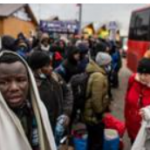
Nigeria’s government has condemned reports that its citizens, and those of other African countries, have been stopped from leaving war-torn Ukraine. Isaac, a Nigerian man trying to get into Poland, said border staff told him they were “not tending to Africans”. “We’ve been chased back, we’ve been hit with police armed with sticks,” he told the BBC. South African foreign office official Clayson Monyela also said students had been “badly treated” at the border. There have also been numerous reports of Ukrainian security officials preventing Africans from catching buses and trains going to the border.The BBC is not responsible for the content of external sites. Osemen, from Nigeria, told the BBC he had tried to get on a train in Lviv to take him to the Polish border but was told only Ukrainians would be allowed on board. Nigeria’s President Muhammadu Buhari said there were about 4,000 Nigerians in Ukraine, mostly students. He said one group had repeatedly been refused entry to Poland so they travelled back into Ukraine to head for Hungary instead. “All who flee a conflict situation have the same right to safe passage under the UN Convention, and the colour of their passport or their skin should make no difference,” Mr Buhari said in a tweet. More than 350,000 Ukrainians have managed to flee the Russian invasion so far.(BBC)…[+]

Russia doubles interest rate after rouble slumps

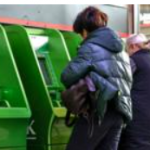
Russia has more than doubled its interest rate to 20% in a bid to halt a slump in the value of its currency. The Bank of Russia raised the rate from 9.5% after the rouble sank 30% after new Western sanctions. The currency then eased back to stand 20% down. The collapse in value erodes the currency’s buying power and could wipe out the savings of ordinary Russians. Amid pictures at the weekend of queues at cash machines, Russia said it had the resources to ride out sanctions. Ahead of an emergency meeting between President Vladimir Putin and his economic advisers on Monday, Kremlin spokesman Dmitry Peskov said: “These are heavy sanctions, they’re problematic, but Russia has the necessary potential to compensate the damage from these sanctions.” He said Russia would respond with its own sanctions. At the weekend, Russia’s central bank issued an appeal for calm amid fears that new financial sanctions could spark a run on its banks. It said it had the “the necessary resources and tools to maintain financial stability.”(BBC)…[+]

Half a million flee as fighting rages

More than half a million people have fled their homes to escape the war in Ukraine, the UN says, as heavy fighting continues across the country. Major cities – including Kiev, Kharkiv, and Chernihiv – remain under attack from Russian forces. A government official said dozens of civilians were killed in Kharkiv as shelling continued into the morning. On the northern border with Belarus, Ukrainian and Russian officials are meeting for talks for the first time.  Hopes for a breakthrough are slim – but Ukrainian President Volodymyr Zelensky said there was a “small chance to end the war”. The United Nations human rights chief, Michelle Bachelet, said millions of civilians were being forced to huddle in makeshift bomb shelters such as underground rail stations to escape explosions. Since the invasion began on Thursday, her office has recorded 102 civilian deaths, including seven children – and more than 300 injured. “The real figures are, I fear, considerably higher,” she said. In the capital, Kyiv, the bulk of Russian forces are about 30km (19 miles) outside the north of the city, slowed by fierce Ukrainian resistance, according to the UK Ministry of Defence.(BBC)…[+]

US trucker convoys prompt National Guard deployment in Washington

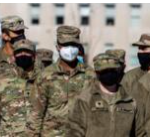
The US is to deploy hundreds of unarmed National Guard troops to Washington ahead of the arrival of trucker convoys protesting against pandemic restrictions. Defense Secretary Lloyd Austin approved a request from the District of Columbia government and the US Capitol police for 700 troops. Around 25 separate convoys plan to join forces and converge on the nation’s capital, to replicate recent protests in Canada. The stand-off there paralysed Ottawa for days. The National Guard troops will man traffic posts and “provide command and control” from Saturday until 7 March, a statement said. Some 50 “large tactical vehicles” will be stationed 24 hours a day, it added. The troops will not carry firearms or take part in law enforcement.(BBC)…[+]

Ukraine conflict world reaction: Sanctions, refugees and fears of war

Major Western nations have reacted with outrage at Russia’s invasion of Ukraine, accusing it of bringing war back to Europe. US President Joe Biden feared a “catastrophic loss of life” and said allies would impose severe sanctions. In eastern Europe, the fears extended to coping with a wave of refugees. Other nations, including China, which bridled at the word invasion, were more muted. Some focused more on the safety of their citizens in Ukraine. Ukraine says Russia is carrying out a full-scale attack from many directions, but the details of the assault and the number of casualties are not yet clear. Russian President Vladimir Putin has spoken of a “special military operation” aimed at the demilitarisation and “denazification” of Ukraine, but his overall goals also remain unclear.(BBC)…[+]

Nicaragua court convicts government critics of ‘conspiracy’

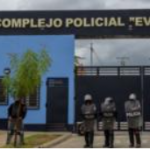
A court in Nicaragua has found seven critics of the government of President Daniel Ortega guilty of conspiracy in what human rights groups have denounced as a “political trial”. Among those convicted are three opposition leaders who had planned to run in the 2021 election. Dozens of government critics were detained in the run-up to the poll, in which Mr Ortega won a fifth term. The prosecution has asked for sentences ranging between eight and 13 years. Those convicted are: Juan Sebastián Chamorro, presidential hopeful

  • Arturo Cruz, former ambassador to the US and presidential hopeful
  • Félix Maradiaga, presidential hopeful
  • José Pallais, former deputy foreign minister
  • José Adán Aguerri, business leader
  • Tamara Dávila, activist with opposition group Unamos
  • Violeta Granera, sociologist and opposition activist

In a trial held at El Chipote prison behind closed doors, the judges found the seven guilty of “conspiracy to undermine [Nicaragua’s] national integrity”. The rights group Nicaraguan Center for Human Rights said the seven were innocent: “The regime convicted them of crimes they have not committed.” They are not the first to be convicted in a wave of trials against opponents of the Ortega government. Earlier this month, two of the most outspoken critics of the president – Dora Téllez and Lesther Alemán – were also found guilty of conspiracy in trials dismissed by rights groups as a “sham”. Less than two weeks ago, another jailed opposition leader, Hugo Torres, died while awaiting trial.(BBC)…[+]

Burkina Faso gold mine blast kills 60

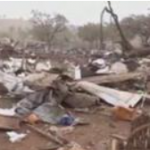
About 60 people have died after an explosion at a makeshift gold mine in a village in south-west Burkina Faso, local officials say. The blast happened in a market at the gold-mining site when dynamite stored there caught fire, witnesses said. “There were bodies strewn everywhere. It was an explosion that managed to uproot trees and bring down houses,” a judicial source told Reuters. Dozens of injured people have been evacuated to the nearest hospital.  It is thought women and children are among the casualties, the AFP news agency reports. An investigation was opened into Monday’s incident, after the regional prosecutor visited the scene. One person has been arrested, and is being held for questioning. The goldmine has since been closed until further notice, according to Burkina Faso’s news agency, AIB. The explosion has been described as destroying “everything on its path,” according to a local news reporter from RTB TV. Many of the miners at the site are displaced people from elsewhere in the country, local leader Sansan Urbain Kambou told Reuters. Burkina Faso is one of Africa’s biggest gold producers, with many mines run by international firms, as well as informal ones without any oversite or regulation. BBC West Africa correspondent Nicolas Negoce says that since 2009, gold has become Burkina Faso’s leading export, overtaking cotton.(BBC)…[+]