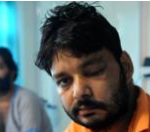
More than 4,300 people have died of the deadly “black fungus” in India in a growing epidemic that mainly affects Covid-19 patients. India has reported 45,374 cases of this rare and dangerous infection, called mucormycosis, Health Minister Mansukh Mandaviya has said. It affects the nose, eyes and sometimes the brain, and usually strikes 12-18 days after recovery from Covid. Nearly half of those infected are still receiving treatment. Doctors say the fungus has a link with the steroids used to treat Covid, and diabetics are at particular risk. Steroids reduce inflammation in the lungs for Covid-19 and appear to help stop some of the damage that can happen when the body’s immune system goes into overdrive to fight off the coronavirus. But they also reduce immunity and push up blood sugar levels in both diabetics and non-diabetic Covid-19 patients.(BBC)…[+]
english news
Covid: Anger as half of Australians in lockdown again
Anger is growing in Australia as 13 million people – about half the population – endure fresh lockdowns to quash Covid outbreaks. A third state went into lockdown on Tuesday. Stay-at-home orders are now in place in South Australia, Victoria and parts of New South Wales. Many people have expressed frustration at being back in highly policed lockdowns 18 months into the pandemic. And re-openings in the UK and the US have put pressure on the government. Fewer than 14% of people are vaccinated – the worst rating among OECD nations.
Prime Minister Scott Morrison has been heavily criticised over the slow vaccination rate, but has resisted calls to apologise. “No country has got their pandemic response 100%,” he told reporters on Wednesday. He again mentioned Australia’s success in keeping overall infections low compared to those in many nations. 915 people have died of Covid in Australia. Mr Morrison noted that the UK had recorded more than 90 deaths in a single day on Tuesday. Until recently, Australia’s strategy of border closures, quarantine programmes and snap lockdowns helped keep cases low. But the highly contagious Delta variant has challenged these defences in the past month.(BBC)…[+]
Gender reveal party couple face jail over deadly California wildfire
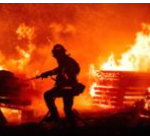
A US couple whose gender reveal party last year was blamed for starting a deadly California wildfire face up to 20 years in prison, officials say. Refugio Manuel Jimenez Jr and Angela Renee Jimenez have been charged with several offences, including involuntary manslaughter, over the El Dorado fire. Officials say a pyrotechnic device at the gender event last September sparked the blaze, in which one firefighter was killed and others were hurt. The couple have pleaded not guilty. The El Dorado fire spread over more than 22,000 acres in San Bernardino County, southern California, destroying homes and other properties. The California Department of Forestry and Fire Protection, known as Cal Fire, alleged that a “smoke-generating pyrotechnic device” used during a gender reveal party on 5 September was the cause of the blaze.(BBC)…[+]
WhatsApp blocks two million Indian accounts

WhatsApp has said it blocked over two million accounts in India in May and June for violating rules.
The service said 95% of these users were blocked for violating the limits of the number of times messages can be forwarded in India. The submissions were made by WhatsApp in its first monthly compliance report under India’s controversial new IT rules. India is WhatsApp’s largest market with about 400 million users. The Facebook-owned messaging service said its “top focus” has been to prevent accounts in India from sending harmful or unwanted messages at scale. Using advanced machine learning technology, WhatsApp reportedly bans close to eight million accounts across the world every month. Two million accounts in India sending a “high and abnormal rate of messages” were banned in India alone between 15 May and 15 June, the service said.(BBC)…[+]
Ethiopia’s Tigray crisis: Fleeing for fear of new ethnic conflict
Almost every night, a handful of young men slip across the well-guarded border, swimming across a fast-flowing brown river and trudging into Sudan to escape what they say is a sudden upsurge in ethnic violence in the far western corner of Ethiopia’s Tigray region.
This fertile area, still held by soldiers and militias loyal to Ethiopia’s federal government, is now seen as a likely next target for Tigray’s rebel fighters, as they seek to strengthen their control over the region and secure a potentially crucial supply route into neighbouring Sudan. The conflict in Tigray is now showing dangerous signs of transforming into a more widespread ethnic conflict that could suck in other parts of Ethiopia. “They gave us two days to leave, or we would be killed,” said one 18-year-old Tigrayan, who’d just crossed the river with three school friends and asked for his identity to be hidden to protect relatives still living inside Ethiopia.(BBC)…[+]
South Africa Zuma riots: Armed police protect food deliveries
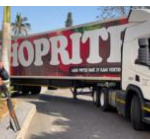
Armed South African police officers are protecting deliveries of food and supplies to supermarkets after days of widespread looting and violence. Riots were sparked by the jailing of former President Jacob Zuma. An estimated $1bn (£720m) worth of stock was stolen in KwaZulu-Natal with at least 800 retail shops looted, a mayor in the province said. President Cyril Ramaphosa said that his government would not allow “anarchy and mayhem” to prevail. He also suggested that the violence had been deliberately provoked. In KwaZulu-Natal, Mr Zuma’s home province and the epicentre of the violence, many have been queuing for food, with some lining up from the early hours of the morning just to get a few items. People queueing told the BBC they were concerned about feeding their families, getting formula and nappies for their babies, and even food for their pets.(BBC)…[+]
Germany floods: At least 33 dead and dozens missing after record rain
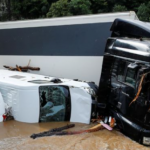
At least 33 people have died in western Germany and many more are missing following severe floods, police say. The worst of the flooding has been in the states of Rhineland-Palatinate and North Rhine-Westphalia, where buildings and cars have been washed away. At least six others have died in neighbouring Belgium, and the city of Liège has urged all residents to leave. It follows record rainfall in parts of western Europe that has caused major rivers to burst their banks. The Netherlands has also been badly hit, with flooding rivers damaging many houses in the southern province of Limburg. A number of care homes have also had to be evacuated. Malu Dreyer, chief of Germany’s Rhineland-Palatinate state, described the flooding as a “catastrophe”.(BBC)…[+]
Melbourne: Australian city to enter snap lockdown with 18 cases
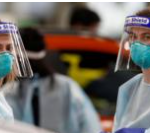
The Australian state of Victoria – home to its second largest city, Melbourne – is about to enter a snap lockdown after two more local cases of the virus. The latest outbreak brings the total number of virus cases there to 18. This is the fifth lockdown for Victoria since the pandemic began and will last until Tuesday. Melbourne had largely avoided new cases despite an outbreak in neighbouring New South Wales, home to Australia’s largest city, Sydney. But earlier this week, a team of Sydney furniture movers travelled to Melbourne, leading to a spread in cases. “You only get one chance to go hard and go fast. If you wait, if you hesitate, if you doubt, then you will always be looking back wishing you had done more earlier,” Victoria’s Premier Daniel Andrews said.(BBC)…[+]
Cuba protests: Tax on food and medicine imports lifted
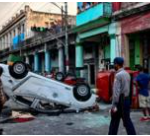
Cuba says it will allow travellers arriving in the country to bring in food, medicine and other essentials without paying import duties. The announcement was made following the biggest anti-government protests on the Communist-run island in decades. Thousands took to the streets on Sunday to protest over food and medicine shortages, price increases and the government’s handling of Covid-19. There will be no limit on such goods brought in by travellers from Monday. However, the measure is only temporary and has been derided as “too little, too late” by critics of the government.(BBC)…[+]
South Africa Zuma riots: Queues form in Durban due to shortages
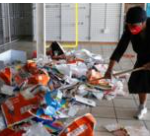
Long queues have formed outside shops and petrol stations in South Africa’s port city of Durban following days of unrest sparked by the jailing of former President Jacob Zuma. Firefighters are cleaning up the mess, helped by local residents wielding brooms. Rioters looted and destroyed shops, leading to severe shortages of basics. Some petrol stations have limited the amount motorists can buy, as fuel transportation has been disrupted. Local media are also reporting queues in Johannesburg. Meanwhile, Northern Cape and Mpumalanga have become the latest provinces to be hit by violence. The BBC’s Nomsa Maseko in Durban says the city’s business owners are slowly returning to their shops to evaluate the damage following days of unrest. Empty shoe boxes, broken dishes, rotting food and debris litter virtually every street in this normally bustling city centre, she says.(BBC)…[+]